

Swiss Avalanche Bulletins Start Today
19th November 2026
The Institute for Snow and Avalanche Research SLF provides daily information on avalanche danger, snowpack and weather across the Swiss Alps. NEW
Anyone planning a ski tour or responsible for the safety of roads and railway lines can immediately see the forecast situation in their local area.
Additional forecasts looking two days ahead make planning easier.
See here for more: Avalanche bulletin and snow situation | White Risk
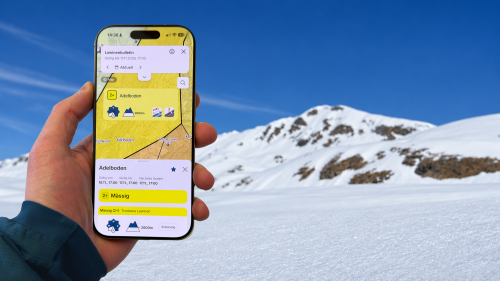
The new avalanche bulletin for the start of the 2026/27 season: Several new features provide more detailed and comprehensive information. (Photo: Christoph Suter / SLF)
- Avalanche bulletin 2026/27: detailed information for each of Switzerland’s 149 warning regions.
- Local avalanche danger: the zoom function shows where the danger is especially high and which avalanche problems prevail.
- Plan ski tours earlier: avalanche forecasts now also cover the day after tomorrow.
Today, Thursday 19th November, there is ‘considerable’ risk – Level 3 – across a large part of the Swiss Alps as a major storm hits.
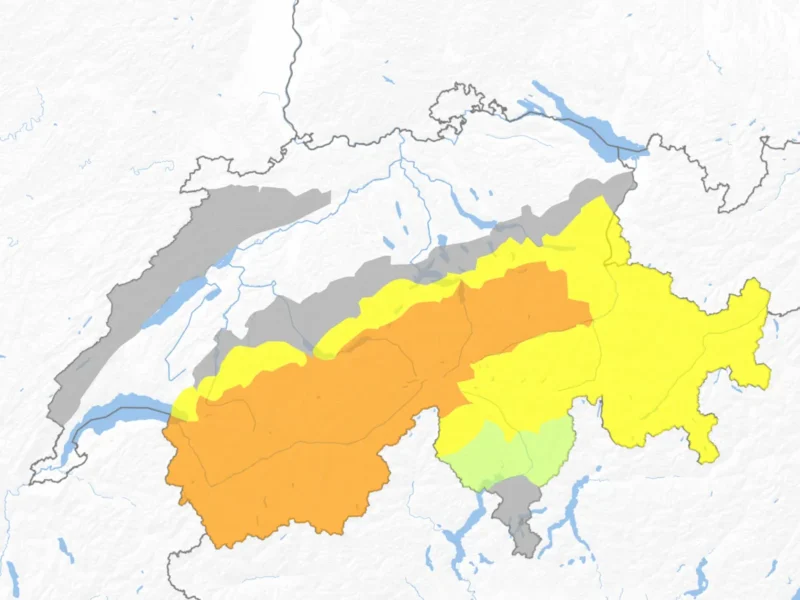
Image c/o Swiss Institute for Snow and Avalanche Research SLF.
Check out the updated PlanetSKI snow report:
The avalanche bulletin is more regional this winter
From the start of the 2026/27 season, the Avalanche Warning Service (AWS) will prepare all the information in the avalanche bulletin for each individual warning region.
“Switzerland is home to 149 warning regions, and we are now providing detailed information for each of them,” said Kurt Winkler, avalanche forecaster at the SLF.
Those who want to find out about the current avalanche situation can consult a more detailed description of the conditions in the areas relevant to them.
“In future, the bulletin will also describe the structure of the snowpack more precisely at local level,” added Winkler.
Until now, a single text described the structure of the snowpack for the whole of Switzerland.
Now a description is provided for each individual warning region.
The revamped avalanche bulletin also gives those responsible for natural hazards at cantonal and municipal level a better basis for their work, such as when they have to decide whether to close a road or a railway line.
Using a new zoom function, users can visualise the regional situation quickly and clearly.
The overview map also uses hatching to show the intermediate levels developed by the SLF in 2022.
These indicate whether a given danger is in the lower, middle or upper range of a danger level.
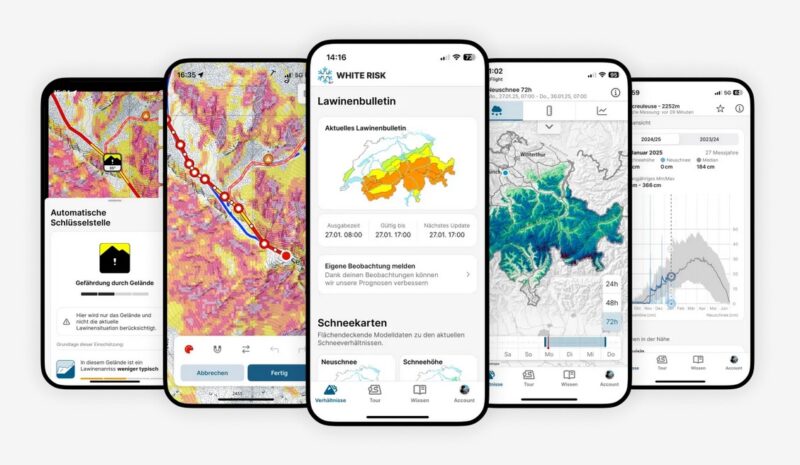
Image c/o WSL Institute for Snow and Avalanche Research (SLF)
In addition, graphic symbols show which slope aspects and which elevations are likely to be particularly hazardous.
If you zoom in even closer, you can see which avalanche problems are the most prevalent, such as wind slab or weak layers deep in the old snowpack.
The forecasts looking two days ahead are another new feature.
This allows winter sports enthusiasts to see at a glance what the weather will be like and how high the avalanche danger is likely to be, explains Winkler: “This means ski tourers can already see on Friday evening, for example, whether they would be better off going on a tour on Saturday or Sunday.”
A regional weather forecast is also displayed for the individual warning regions.
MeteoSwiss supplies forecasts for the temperature profile and wind.
The Operational Snow-Hydrological Service at the SLF provides information on volumes of new snow.
A red exclamation mark highlights critical wind speed values and heavy new snowfall.
A graph illustrates how the snowfall limit has changed over time.
“For key parameters such as new snow and wind in particular, reliable values are now clearly presented and available for the desired warning region,” says Winkler.
Moreover, the bulletin now includes a calendar showing how dangers have developed over the course of the winter. “This is a service for those who want to take a closer look at how weather and avalanche conditions are connected,” says Winkler.
The WSL Institute for Snow and Avalanche Research (SLF) is part of the Swiss Federal Institute for Forest, Snow and Landscape Research (WSL) and thus of the ETH Domain.
Its remit encompasses research and scientific services relating to snow, avalanches, other alpine natural hazards, permafrost and mountain ecosystems.
Its best-known service is the Avalanche Bulletin.

Avalanche accident. Image c/o Valais Cantonal Police
As the season approaches do check out a special section on the website containing all the news & developments for next winter:
Support independent ski journalism
If you enjoy reading our updates please feel free to support us, all money raised is ploughed back into supporting our journalism and content.
PlanetSKI: Number 1 for digital ski news
Your digital platform for ski news, resort information, travel, equipment rental, sport, money saving deals and everything connected with snowsports – web site, social media & more..