


Swiss Glaciers Suffer Extreme Summer Ice Loss
2nd October 2026
More than 5% of the country’s remaining glacier ice has disappeared in 2026 as repeated summer heatwaves take their toll on the Alps. It is the second biggest annual loss on record. NEW
The report comes from Glacier Monitoring Switzerland, Glamos, and what is surprising is the sheer pace of the melting.
Until recently, glaciologists in the Alps considered 2% of ice lost in a single year to be “extreme”.
This year has seen an estimated 5.5% disappear.
“It’s really just disastrous,” said Dr Matthias Huss, director of Glamos.
“Now we are in this new world, in this future, where glaciers are just melting away.
“We are seeing extreme years almost every year now and this is really a worrying situation.”
Scientists estimate Swiss glaciers lost around 2.2 trillion litres of water between July and September alone.
That’s equivalent to more than four times the annual drinking water consumption of Swiss households.
The summer heatwaves of 2026 have impacted glaciers across the Alps.

Grande Motte glacier, Tignes. August 2026. Image c/o David Morgan.
Swiss glaciers started the summer covered by less snow than usual after a mild winter.
Much of that snow disappeared quickly in the early and intense heatwaves of May and June exposing the glacier ice below.
Bare ice is darker and less reflective than fresh snow, so absorbs more of the Sun’s energy.
That left glaciers vulnerable to melting even faster in the subsequent heatwaves of July and August.
“Ten years ago, I wouldn’t have thought that it’s possible to lose glaciers so quickly,” said Dr Fabien Maussion, a glaciologist at the University of Bristol, to the BBC.
“What’s happened over the summer now is extremely distressing… but at the same time it was to be expected from a climate scientist’s perspective.”
The weather this summer has had a significant impact on summer glacier skiing.
For the first time since it began over 60 years ago there was a point when no ski areas were open in the Alps.
- Summer glacier skiing ends in the Alps
- Saas-Fee suspends summer skiing
- Zermatt-Cervinia closes its summer glacier ski area
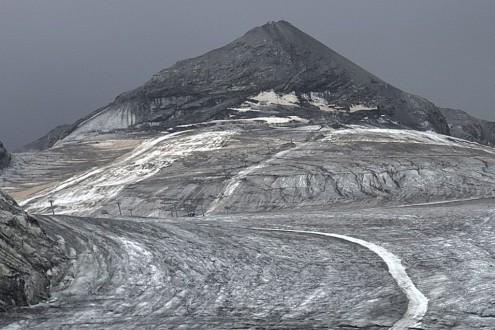
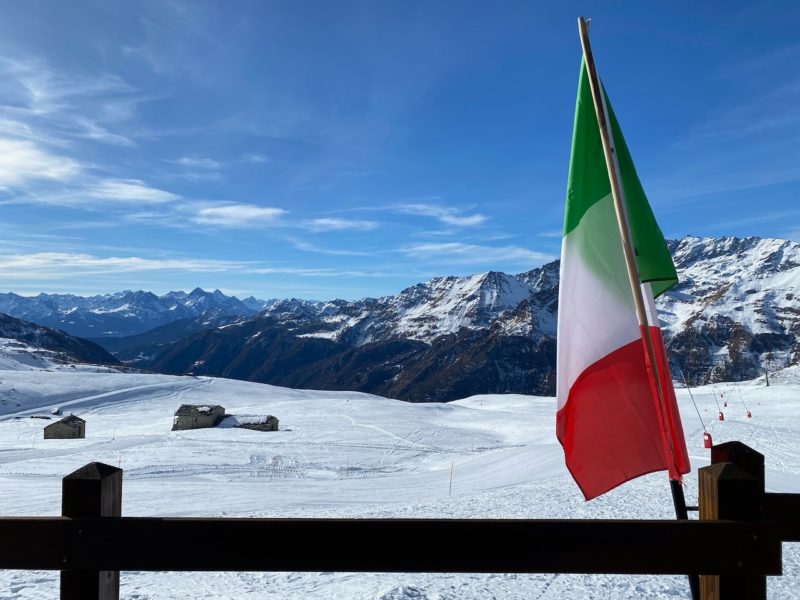
Passo Stelvio, Italy. Photo: pirovano.it, 15 August 2026
Four glacier ski areas in the Alps are now open as Hintertux in Austria opened a small area on Friday 3rd October.
Overall the autumn ski conditions in the Alps remain poor for the time of year.
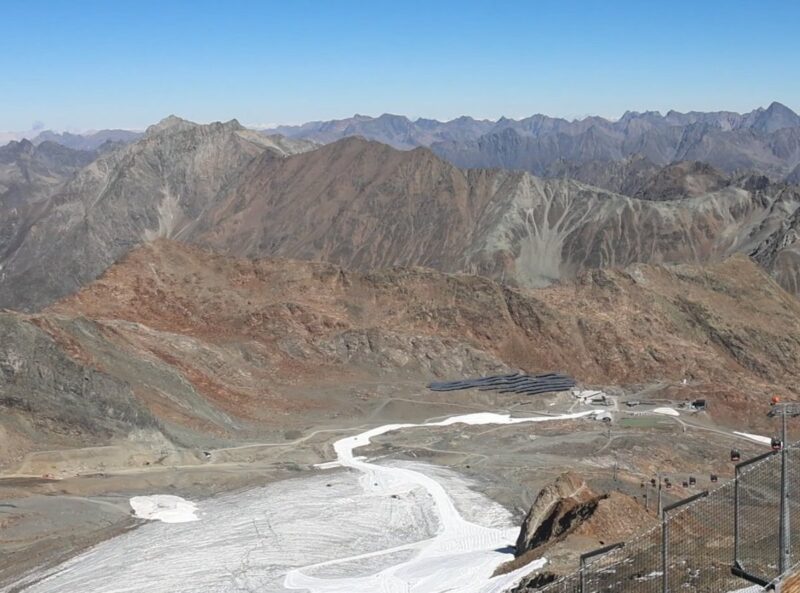
Pitztal, Austria. Image c/o Pitztal
The melting of the glaciers has an impact well beyond snowsports.
Meltwater from glaciers is an important source of water for irrigation and hydropower.
The loss of ice could pose long-term challenges, Huss warned, with smaller glaciers unable to top up water levels to the same extent.
“Every drop of water that runs off during these heatwaves is kind of old water that’s been stocked in the glacier ice centuries or decades ago,” said Huss.
“It’s helping us [now] but it’s unsustainable, so we won’t have it at [our] disposal in the next heatwave.”
The river Rhine reached record lows in places this summer, affecting shipping navigation routes and increasing transport costs.
One of the most ominous findings is what researchers observed at measurement sites at the highest elevations, where temperatures are lowest and glaciers are typically snow-covered.
Even as high as 3,500 metres above sea level, scientists found no snow remaining at the end of summer.
“At some glaciers we’ve seen four metres of ice loss at the highest point, where they should be covered by several metres of winter snow at this time of the year,” said Matthias Huss.
Scientists say the climate is now too warm for many Alpine glaciers to survive.
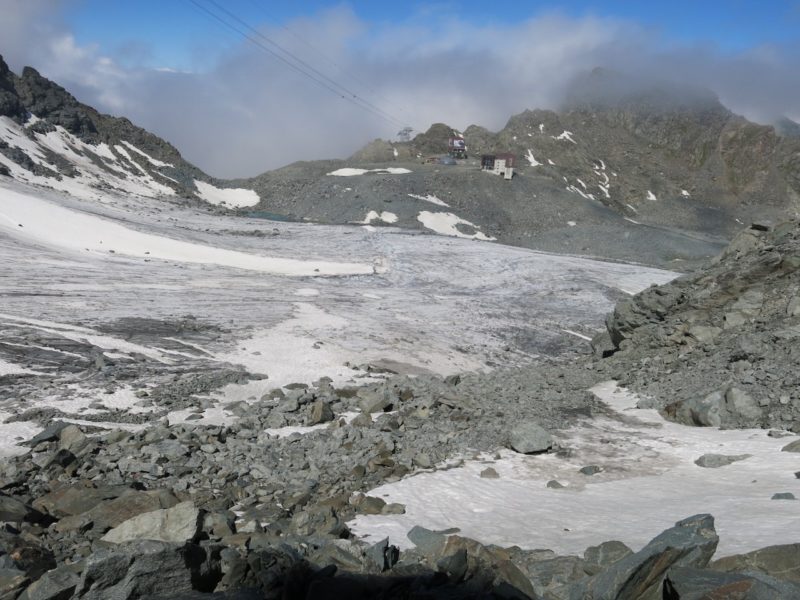
Mont Fort glacier, Switzerland. Image © PlanetSKI
Related Articles
- European heatwave hit the glaciers in the Alps
- European heatwave hits glaciers hard
- ‘Glacier Loss Day’ in the Alps reached
PlanetSKI: Number 1 for digital ski news
Your digital platform for ski news, resort information, travel, equipment rental, sport, money saving deals and everything connected with snowsports – web site, social media & more.