





Swiss Glaciers Face Significant Snow Shortage
9th May 2026
Swiss glaciers saw less snow this winter than usual and the shortfall could accelerate glacier melt this summer. The Upper Valais, Ticino and Graubünden saw significantly less snow according to…
Read more >
Swiss glaciers saw less snow this winter than usual and the shortfall could accelerate glacier melt this summer.
Compared with the annual average between 2010 and 2020, last winter saw an average snow deficit of 25%.
Glaciers in the Bernese Oberland and central Valais regions were less affected and remain close to long‑term averages.
Snow cover plays a key role in determining how glaciers fare during the summer melt period.
If winter snow does not melt completely, glaciers can gain mass; if it does, they lose it.
In the majority of regions, fresh snow levels were lower than those measured in early spring 2025.
Only four winters in the past twenty years have recorded less glacier snowfall than last winter.
In 2022 and 2023, deficits were similar to those seen this year, and both summers saw heavy glacier losses.
“The outlook for this summer is bad,” glaciologist Matthias Huss told the Keystone‑SDA news agency.
Fresh snow acts as a protective blanket, reflecting sunlight and slowing melt, he explained.
If that snow disappears early, darker ice and debris are exposed.
This reduces the albedo effect, causing the glacier surface to absorb more solar energy and heat up faster – a process that further accelerates melting, Huss said.
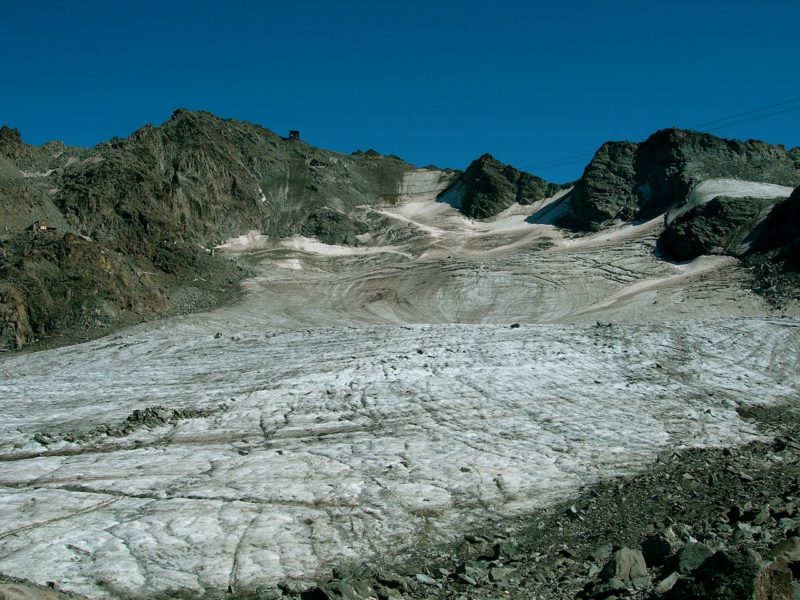
Mont Fort glacier, Verbier. Image © PlanetSKI