


‘Glacier Loss Day’ in Switzerland Reached as Alpine Glaciers Melt in Current Heatwave
28th June 2026
Last modified on July 2nd, 2026
Glacier Loss Day marks the time of year when a glacier has lost all the ice and snow it gained the previous winter. It usually hapoens in August.
Glacier Loss Day was introduced 2022 by researchers from the University of Innsbruck.
This year Monday 29th June has been declared that day.
Typically, ‘Glacier Loss Day’ does not occur until August.
In Switzerland, according to calculations by a glacier research group at the federal technology institute ETH Zurich, this marks the second-earliest such date on record.
“According to our calculations and forecasts, glacier loss day this year will fall on June 29th,” said glaciologist Matthias Huss.
While the exact date may still shift slightly from year to year the overall trend is clear, Huss said.
“The situation is truly exceptional. Only in 2022 – when all glacier melt records were broken – did this day come earlier. Otherwise, this ranks second,” he said.
This year the ongoing heatwave is rapidly depleting the remaining winter reserves.
Huss and his team estimate that meltwater from Swiss glaciers is currently flowing at a rate equivalent to filling an Olympic-sized swimming pool every six seconds.
The fact that Swiss glaciers are already at this critical point is not just down to the recent high temperatures.
“We’ve once again had a winter with too little snow, leaving glaciers with a weak protective layer,” Huss said.
In addition, summer-like heat arrived very early.
“We saw the first heatwaves with temperatures of 30°C in the lowlands as early as May,” he said, followed by the current spell of sustained and unusually intense heat.
“All the high temperatures we are very likely to experience in July and August will lead directly to long-term glacier loss.
“We will certainly lose a large amount of ice this year,” he added.
Extensive melting does have its benefits: water from the glaciers helps cushion falling water levels and rising water temperatures, as long as there is still sufficient glacier area remaining.
Much of the water that flows into the Rhine and the Rhone, two of Europe’s major rivers, comes from the Alpine glaciers.
Glaciers in the Swiss Alps began to retreat about 170 years ago, initially modestly, but in recent decades melting has accelerated significantly as the climate warms.
The volume of Swiss glaciers shrank by 38% between 2000 and 2024.
Huss said Switzerland had already lost 1,200 glaciers in the past 50 years, and now only 1,300 are left.
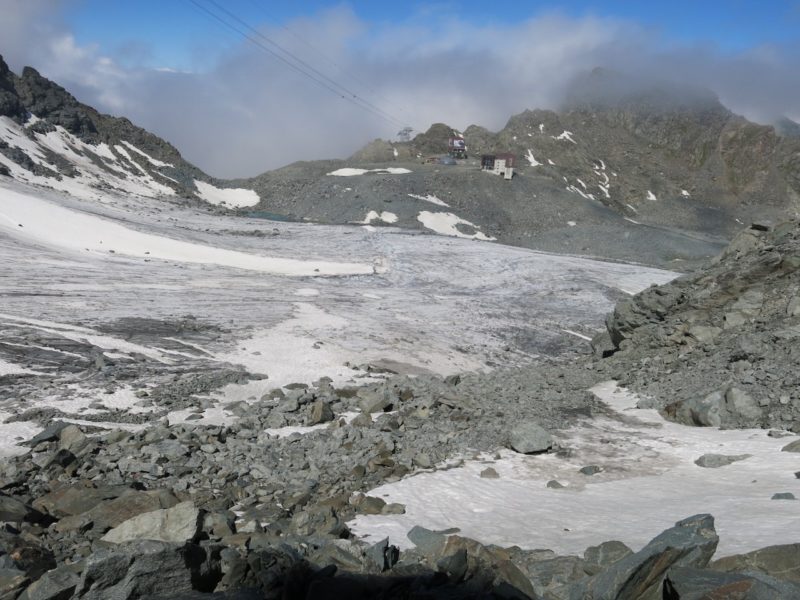
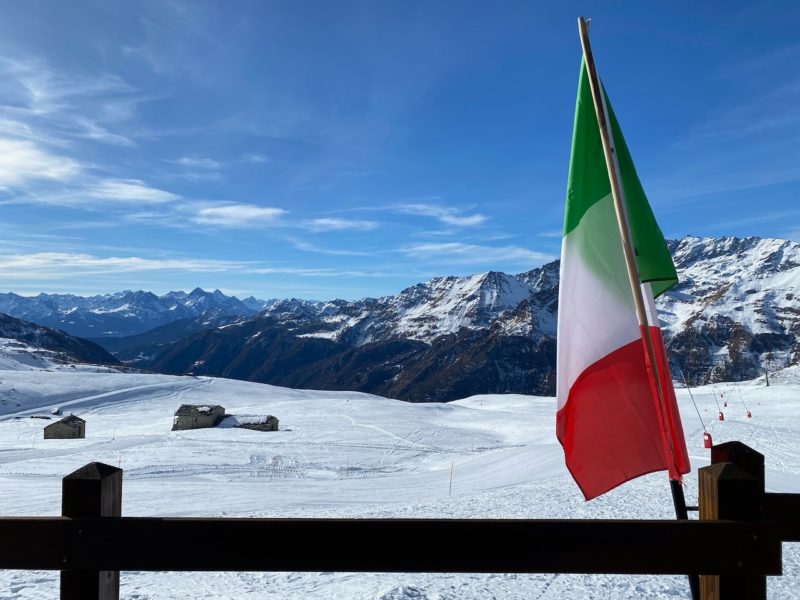
Mont Fort glacier, Switzerland. Image © PlanetSKI
Related Articles:
- Fresh Warnings of Glacier Collapses as Climate Change Makes Mountains Unstable
- Alps set to lose record number of glaciers in next decade
- Italian glacier melt continues
PlanetSKI: Number 1 for digital ski news
Your digital platform for ski news, resort information, travel, equipment rental, sport, money saving deals and everything connected with snowsports – web site, social media & more.