

When You Know How to Ski, But Fear Gets in the Way
21st November 2026 | Sharon Shinwell.
What happens when you loose confidence out on the slopes and how do you get it back? PlanetSKI turns to a Clinical Hypnotherapist/Psychotherapist for advice. NEW
Sharon Shinwell is a Clinical Hypnotherapist, Psychotherapist and Keen Skier.
Here are her thoughts and observations:
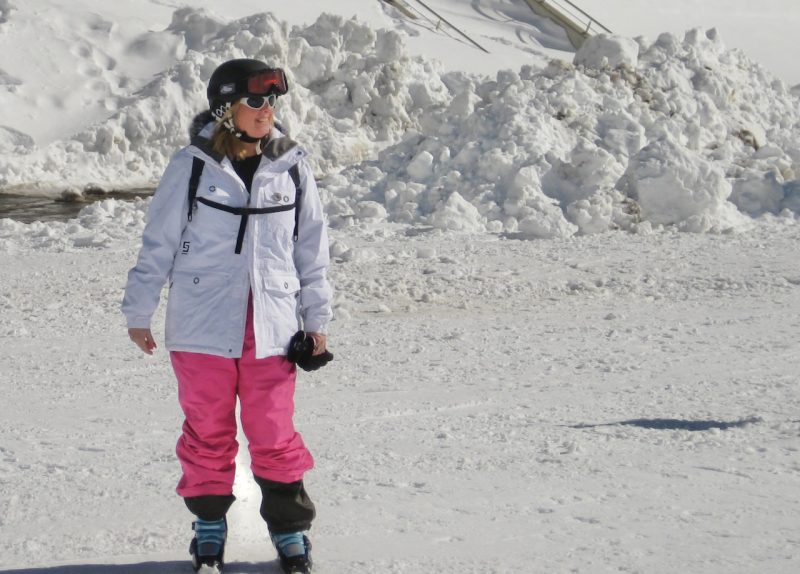
Sharon Shinwell is a UK clinical hypnotherapist, psychotherapist and counsellor
There’s a particular moment on a skiing holiday that many people will recognise.
You’re standing at the top of a slope.
You’ve skied it before, or at least something very similar.
You know how to turn, control your speed and stop.
Yet suddenly, your confidence disappears.
Your stomach tightens and your legs feel stiff.
You watch other skiers setting off quite happily while you stand there wondering why something that should be enjoyable now feels so frightening.
And perhaps the most frustrating part is that you know you can ski.
I’ve experienced those nerves myself.
Skiing has been part of our family life for over 40 years.
We’ve enjoyed countless holidays in the mountains, and I became a good, confident skier.
But it wasn’t always that way.
When I first started skiing, I had to overcome my own nerves.
I know what it’s like to want to enjoy the experience but feel apprehensive about what lies ahead.
I also know the enormous satisfaction that comes when you begin to relax, trust your technique and discover just how enjoyable skiing can be.
That personal experience has stayed with me.
Professionally, I’ve spent more than 25 years working as a clinical hypnotherapist and psychotherapist, helping people deal with anxiety, fears and confidence problems.
And one thing I’ve learnt, both through my work and through skiing, is that being capable of doing something and feeling confident about doing it are not always the same thing.
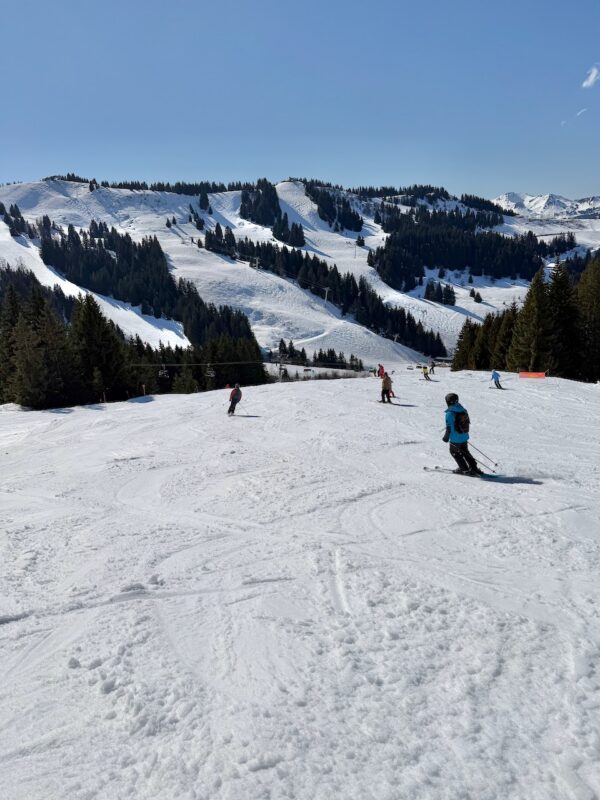
Les Gets, France. Image © PlanetSKI
Why confidence can disappear
For beginners, some nervousness is perfectly natural.
You’re learning to balance on skis while travelling downhill, often surrounded by other people moving at different speeds.
But fear isn’t confined to beginners.
You might be comfortable on a gentle blue run, only to become anxious when the slope gets steeper.
Perhaps you’ve had a fall or an unpleasant experience that’s made you question your ability.
Sometimes there’s no particular incident at all.
As we get older, we may become more conscious of the possibility of injury.
Slopes we once tackled without a second thought can begin to look rather less inviting.
None of this necessarily means you’ve lost your skiing ability.
However, there’s an important distinction between being frightened because you lack the skills for a particular slope and being frightened despite having the necessary skills.
If a slope is beyond your ability, that fear may be telling you something useful.
The answer is better instruction and more practice, not trying to convince yourself that there’s nothing to worry about.
Lessons are the foundation of confident skiing
If there’s one piece of advice I would give anyone who wants to enjoy skiing, it’s this: invest in proper lessons with a qualified ski instructor.
That applies whether you’re putting on skis for the first time or returning to the mountains after years of experience.
Good instruction teaches you how to control your speed, turn effectively, stop safely and adapt to different conditions.
Those skills are the foundation of genuine confidence.
It’s also worth remembering that a lesson isn’t just for someone who can’t ski.
Even experienced skiers can develop habits that make skiing unnecessarily difficult.
A good instructor can spot a technical weakness, explain what’s happening and help you correct it.
If you’ve lost confidence, tell your instructor before the lesson begins.
Explain what worries you and what you’d like to achieve.
You don’t necessarily need someone who will take you onto increasingly difficult slopes.
You may need someone who will help you feel comfortable again on terrain that suits your ability.
Sometimes a few well-timed corrections and the reassurance of an experienced instructor can make a remarkable difference.
And if you’re learning to ski, don’t feel pressured to keep up with friends or family members who have been skiing for years.
Give yourself the time and professional tuition you need.
No amount of positive thinking or hypnosis can replace proper skiing technique.
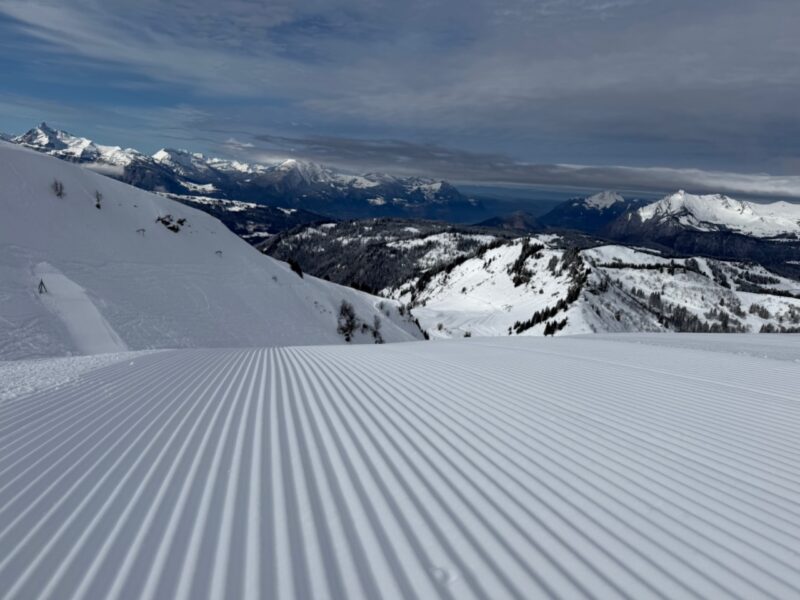
Les Gets, France. Image © PlanetSKI
What fear does to your skiing
When we become frightened, our bodies respond automatically.
Our breathing may become shallow, our muscles tighten and our attention shifts towards everything that could go wrong.
Unfortunately, this can interfere with the movements we need to ski well.
Instead of staying balanced and allowing our skis to turn naturally, we may become rigid, lean backwards or rush our turns.
And when the skiing starts to feel awkward, it’s easy to think, I knew I couldn’t do it.
In reality, anxiety may simply be making it harder to use skills we already possess.
This can create a frustrating cycle.
You worry about skiing badly, the worry makes you tense, and the tension makes your skiing feel less controlled.
The next time you approach a similar slope, you remember how frightened you felt.
Before long, you may find yourself worrying about tomorrow’s skiing while you’re still sitting in the restaurant the evening before.
The pressure to keep up
Ski holidays are often shared with partners, friends or family members whose abilities and confidence can be very different.
Perhaps your partner is an excellent skier. Your friends are keen to head for the black runs.
Your children, who once needed help putting their boots on, now disappear down the mountain without a second thought.
Meanwhile, you’re worrying about holding everybody up.
So you agree to ski something you’re not comfortable with rather than risk disappointing anyone.
It’s a situation that can turn a wonderful holiday into something you begin to dread.
But skiing isn’t a competition.
There’s no reason everyone in a group has to spend every minute on the same slopes.
Sometimes the most helpful thing you can do for your confidence is to give yourself permission to ski at your own pace.
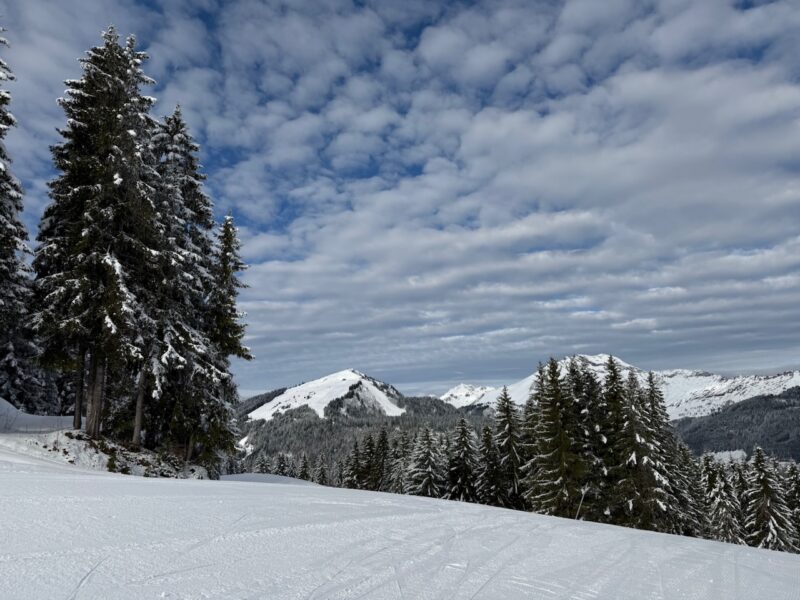
Les Gets, France. Image © PlanetSKI
Rebuilding confidence, one run at a time
When someone loses confidence, the temptation is often to tackle the problem head-on.
They tell themselves they must stop being frightened, push through the anxiety and prove they can still ski.
But forcing yourself into situations that feel overwhelming can sometimes make matters worse.
A better approach is to begin somewhere you feel reasonably comfortable.
Choose a gentle slope.
Make a few easy turns.
Notice how you control your speed and how your skis respond when you’re relaxed.
Rather than worrying about reaching the bottom, concentrate on the next turn.
You don’t have to conquer the mountain that morning.
You’re simply reminding yourself what it feels like to ski comfortably again.
And don’t hesitate to book another lesson.
Even after years of skiing, there’s always something to learn.
Preparing your mind before your skiing holiday
One of the interesting things about anxiety is how much of it can happen before the event we’re frightened of.
Someone worried about skiing may spend weeks imagining themselves falling, losing control or becoming stranded halfway down a steep slope.
By the time their holiday arrives, they’ve mentally rehearsed dozens of disasters.
Yet we can also use imagination in a more helpful way.
Mental rehearsal is widely used in sport, and it can be useful for nervous skiers too.
Find somewhere quiet and imagine yourself skiing a familiar, manageable run.
Picture the snow beneath your skis, the feeling of being balanced and the gentle rhythm of making controlled turns.
Imagine looking ahead, breathing comfortably and responding calmly to the slope.
The purpose isn’t to pretend skiing carries no risks.
It’s to help your mind become more familiar with the experience of skiing confidently rather than repeatedly anticipating something going wrong.
This is also one of the principles behind self-hypnosis.
As a hypnotherapist, I use relaxation, focused attention and positive mental imagery to help people work on the thoughts and feelings associated with anxiety.
For skiing, self-hypnosis may help someone who has already learnt the necessary skills but finds that fear prevents them from using those skills comfortably.
It’s an additional tool, not an alternative to professional instruction.
Remember why you wanted to ski
After more than four decades of family skiing holidays, I still believe there’s something rather special about being in the mountains.
The fresh air, the scenery, the pleasure of a beautifully groomed piste and that wonderful feeling when your turns come together almost without thinking.
And having experienced skiing nerves myself in those early days, I appreciate just how rewarding it can be when confidence begins to grow.
It’s a shame when anxiety takes those experiences away from someone who genuinely wants to enjoy the sport.
But confidence doesn’t have to mean skiing faster, tackling black runs or keeping up with everybody else.
Sometimes it simply means standing at the top of a slope, feeling comfortable with your decision and knowing you can enjoy the run ahead.
And if that means choosing a gentle blue piste followed by a leisurely lunch in the sunshine, there’s absolutely nothing wrong with that.
After all, skiing is supposed to be enjoyable.
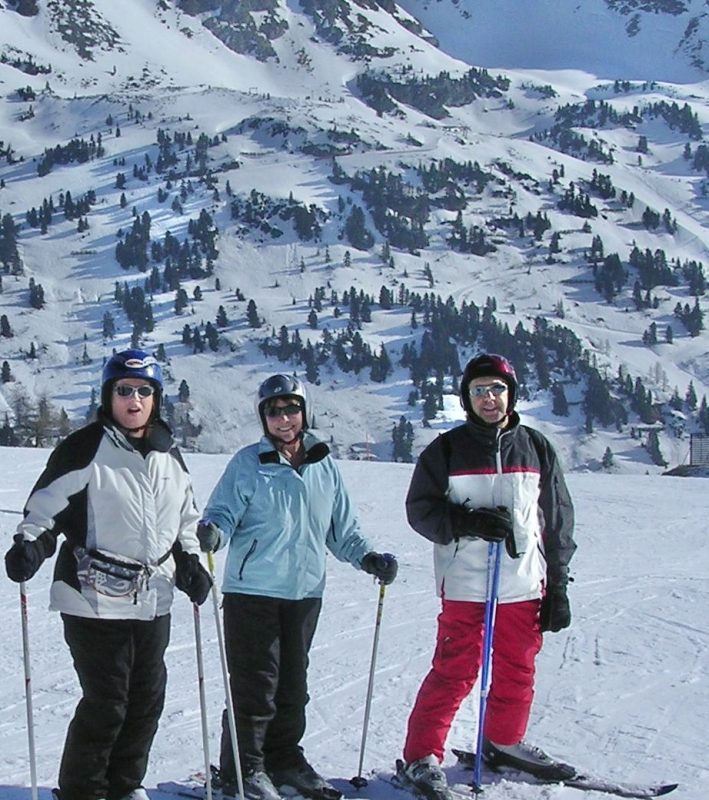
Sharon Shinwell is a UK clinical hypnotherapist, psychotherapist and counsellor.
Related Article:
Sharon Shinwell has more than 25 years’ professional experience helping people with anxiety, fears and confidence issues.
She and her family have enjoyed skiing for over 40 years, and Sharon draws on her own early experiences of skiing nerves as well as her professional knowledge.
She is the creator of the Fear of Skiing Self-Hypnosis MP3 and companion eBook, designed to help nervous skiers work on their confidence alongside proper ski instruction.
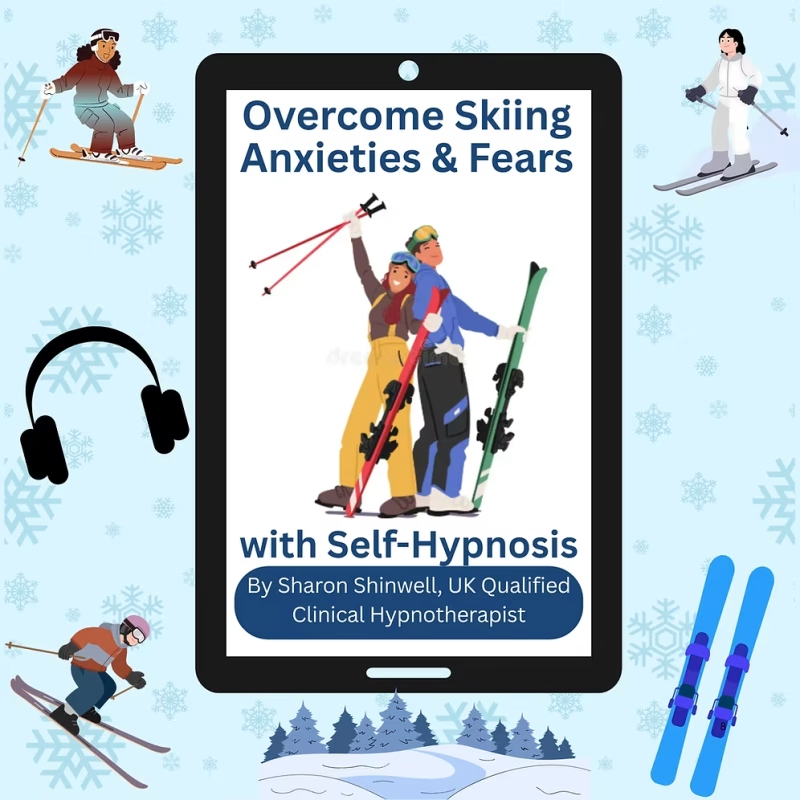
Overcome Skiing Anxieties & Fears.
As the season approaches do check out a special section on the website containing all the news & developments for next winter:
Support independent ski journalism
If you enjoy reading our updates please feel free to support us, all money raised is ploughed back into supporting our journalism and content.
PlanetSKI: Number 1 for digital ski news
Your digital platform for ski news, resort information, travel, equipment rental, sport, money saving deals and everything connected with snowsports – web site, social media & more..