
PlanetSKI Visits Belgium
25th September 2025 | James Cove - Bruges, Belgium.
Last modified on September 29th, 2025
In truth not a lot, but there are connections, and we have been sporadically posting this summer about what PlanetSKI gets up to outside of the winter ski season.
Judging by the page views the articles have received, our readers have an interest.
Earlier this month we were in Greece where we learnt much about the skiing in the country known more for sand than snow.
Now we are in Belgium.
Day One:
The start of the journey on the Eurostar jolted our ski memory as it reminded us how travelling by the train to the Alps is a pleasure rather than a chore.
- Arrival just an hour or so before departure
- Simple security and check in
- No weight restrictions on luggage
- An attractive building
- Comfortable seats
- Great views as the landscape rolls by

Eurostar at St Pancras station. Image © PlanetSKI
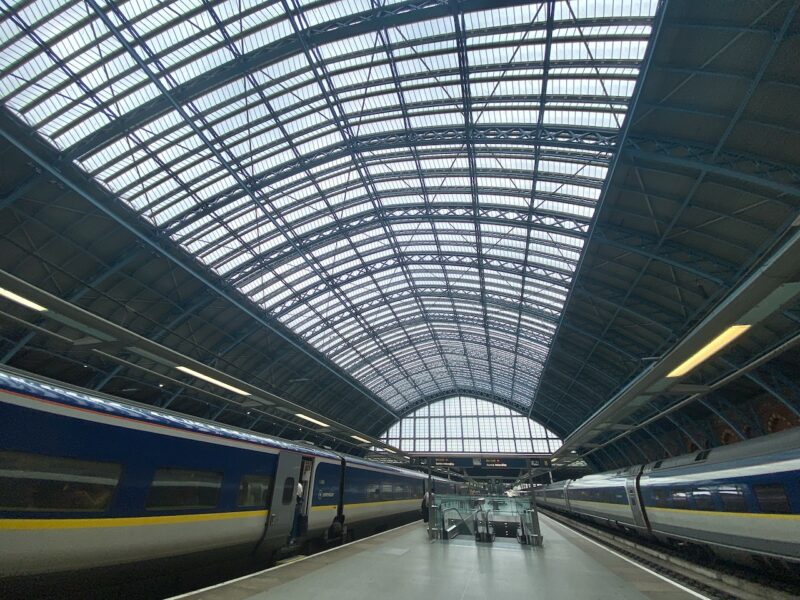
Eurostar at St Pancras station. Image © PlanetSKI

Eurostar interior of train. Image © PlanetSKI
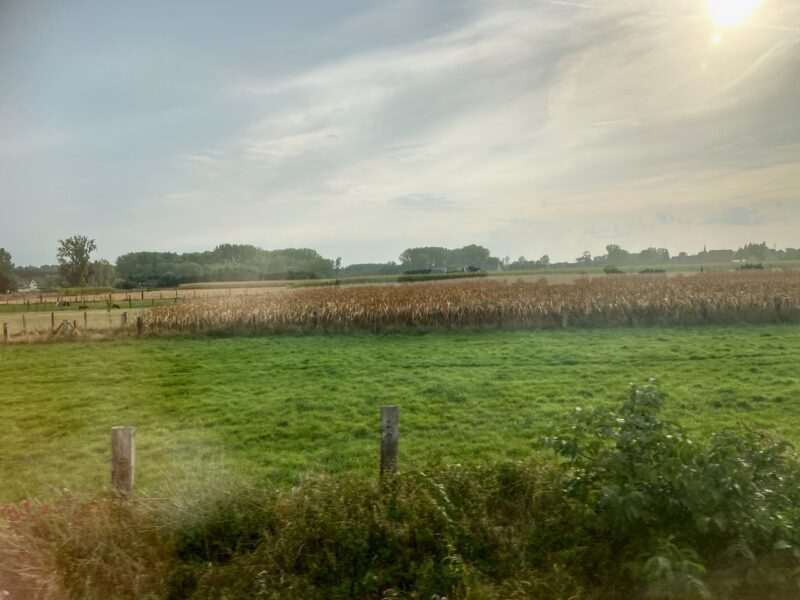
View from Eurostar train travelling at approximately 280km/h -Image © PlanetSKI
We’ll again be travelling to the Alps by train next season without doubt.
The train to Brussels stopped at Lille, where in the winter one simply changes platforms to head to the Alps.
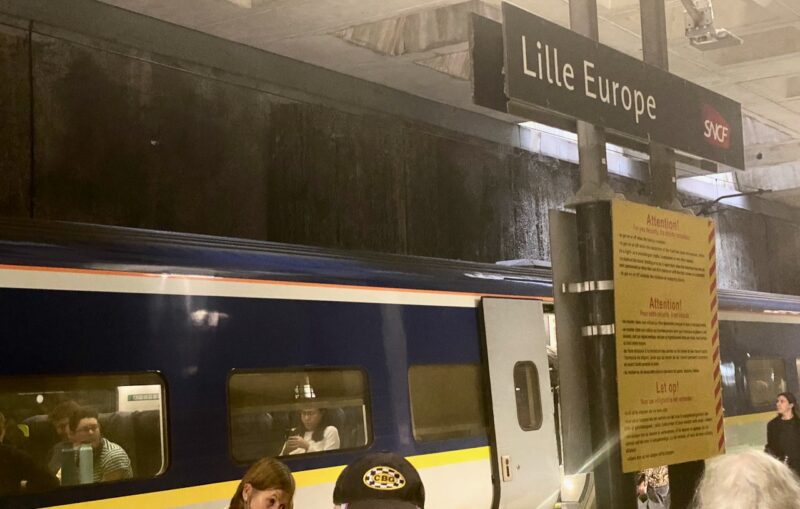
Eurostar station in Lille Europe, France. Image © PlanetSKI
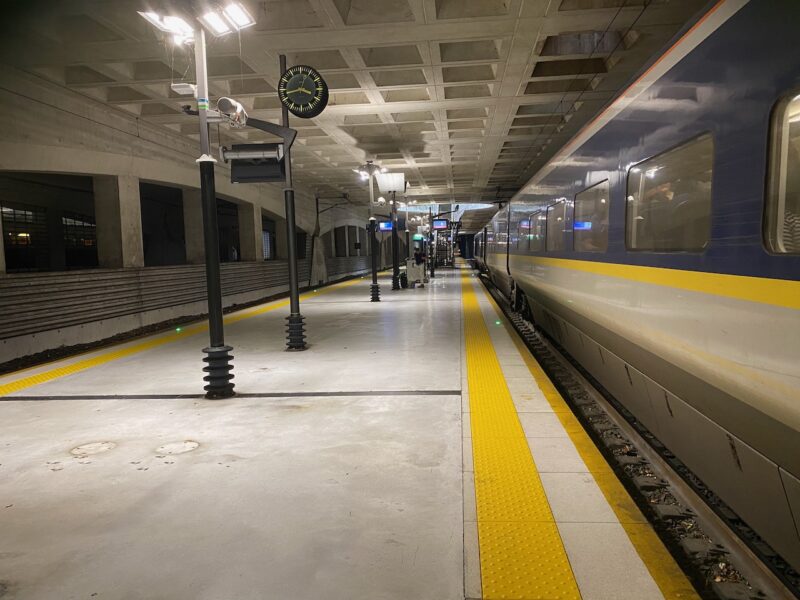
Eurostar station in Lille Europe, France. Image © PlanetSKI
This ski season the timetable has been extended.

Image © Eurostar
Now Belgium has a few skiing connections.
It has a handful of ski areas when conditions allow and some indoor ski slopes.
We wouldn’t recommend it as a ski destination at all, but we always find it interesting to discover anywhere in the world where skiing can be found.
Baraque de Fraiture in the Ardennes region is the highest point in Belgium at 654m.
This makes it one of the best spots in Belgium for outdoor skiing – if snow falls.
It is located in Vielsalm and offers three ski slopes with three ski lifts.
There is also Val de Wanne, with two ski lifts and a 1km slope – the longest in Belgium.
There is also over 10kms of cross-country skiing when enough snow falls.
Other ski areass include Le Montry Lierneux, Montes des Brumes, Ovifat and Thier des Rexhons.
Only two ski areas allow snowboarders, due to safety issues: Baraque de Fraiture and Thiers des Rexhons.
There are indoor slopes at the Ice Mountain Adventure Park in Komen that has two slopes (210m and 85m).
There are two other indoor ski slopes – SnoWorld Antwerpenn and Snow Valley in Peer.
The Belgians love their skiing and are an important market for the alpine destinations.
The Benelux countries are in the top three overseas market for many major resorts.
Out of a total population of 12m it is estimated 11% of Belgians ski.
On this short trip to Belgium we are heading to Bruges.
Like many of the smaller and lesser-known ski resorts I visit in the winter, I am arriving in the ancient city with little knowledge of the place and an open mind.
When I visit as ski area that I do not know then I much prefer to view it without any pre-conceptions and take it for what it is.
This approach held me in good stead at the end of last season:
It is the same with Bruges.
I have heard of its beautiful city centre and its wonderful restaurants, but I shall be visiting with my eyes and ears wide open and simply going with the flow.
On first impression it has more than a passing resemblance to two of our favourite cities in the Alps:
- Innsbruck in Austria
- Annecy in France
There is fabulous medieval architecture and all in a city criss-crossed by a network of canals.

The Stadhuis (City Hall) at night – Bruges, Belgium. Image © PlanetSKI

Monument to Jan Breydel and Pieter de Coninck leaders in Flemish resistance against the French during the 1302 Battle of the Golden Spurs – Markt Square Bruges, Belgium. Image © PlanetSKI

Provincial Court (Provinciaal Hof), a neo-Gothic structure with elaborate architecture that was once the seat of the Bruges city government now restored as a museum. Bruges Markt Square, Belgium. Image © PlanetSKI
Day Two:
Bruges is the capital of West Flanders in northwest Belgium and is the sixth largest city in the country.
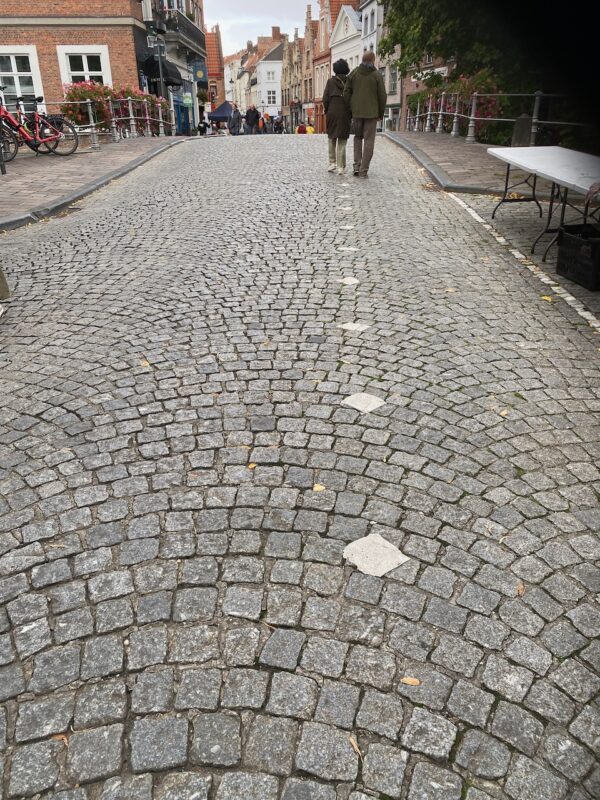
It is defined by its canals, cobbled streets and medieval buildings.
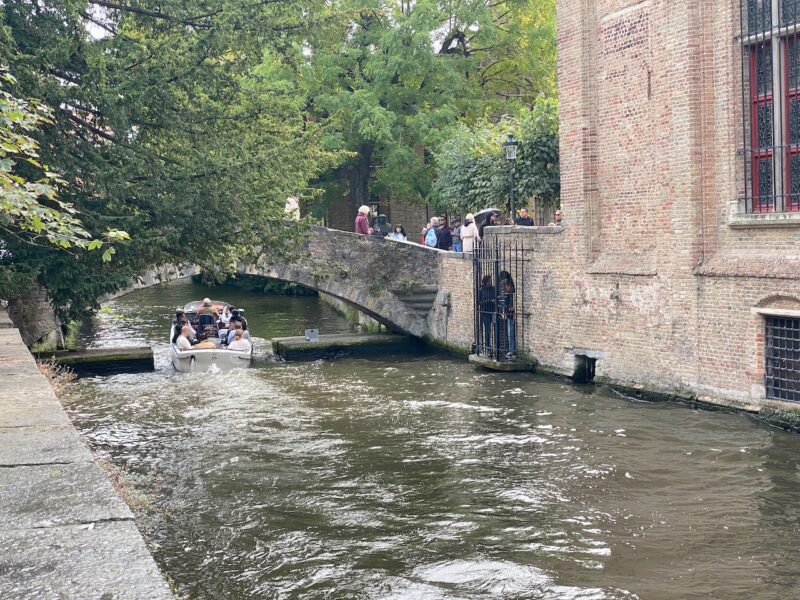
Bruges Canals – Belgium. Image © PlanetSKI
Bruges Bridges – The city’s inner circle features 43 bridges. The large number of bridges along with its canals lends Bruges its nickname the “Venice of the North”. Bruges, Belgium. Image © PlanetSKI
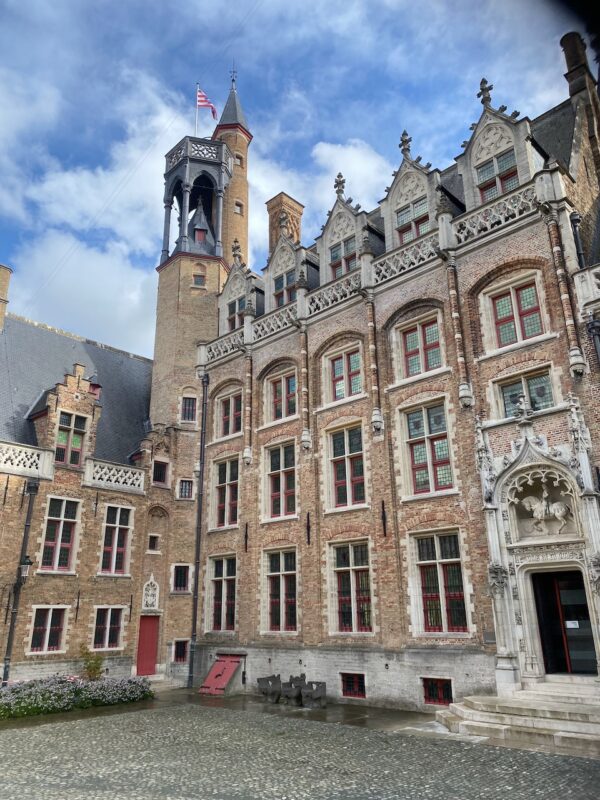
Gruuthusemuseum is a spectacular medieval palace next The Stadhuis (City Hall). It’s worth a visit for the architecture. Bruges, Belgium. Image © PlanetSKI
Its history stretches back to Roman times, though there are early signs of human habitation in the Bronze Age.
The centre of the city is a UNESCO World Heritage Site.
By day it reveals itself in all its glory.

The Stadhuis (City Hall) – Bruges, Belgium. Image © PlanetSKI

Basilica of the Holy Blood. Originally built in 15th Century, renovated in Neo-Gothic style in late 19th Century. Bruges, Belgium. Image © PlanetSKI

Rooftop of the Provost’s House (Proosdij) on Burg Square located opposite the Stadhuis (City Hall) Bruges, Belgium. Image © PlanetSKI
Bruges reminds me in so many ways of Innsbruck in Austria – my favourite city in the Alps.
Like Innsbruck it is steeped in history and simply oozes medieval atmosphere and charm.
Bruges is knows as ‘Venice of the North’, and has more than a passing resemblance to ‘Venice of the Alps’ – Annecy.
Bruges received its city charter on 27th July 1128, and new walls and canals were built.
It had direct access to the sea at that time and a golden era was set to begin, based in part on cloth, wool and weaving.
It became a centre of trade and it is from sea-faring trade that its boom was based and the city blossomed.
It saw unseen economic growth and it turn into one of the most influential trading cities in north-west Europe.
French Kings, Italian bankers, ruling families like the Houses of Burgundy & Habsburg all got in on the action and left their mark on the city.
It became one of the most powerful cities in medieval Europe.
However by 1500 the Zwin channel, also known as the Golden Inlet, that linked it to the sea became silted up.
Soon it was to fall behind Antwerp as the main port of the Low Countries and went into sharp decline.
In the early 16th century it was declared bankrupt as its glory days became a thing of the past.
For three centuries it was a shadow of its former self, the period is known as ‘Bruges La Morte’ (The Dead Age of Bruges).
In the second half of the 19th century, Bruges turned itself into one of the world’s first tourist destinations, attracting wealthy British and French tourists.
To this day it relies on tourism.
They come for its history and culture.
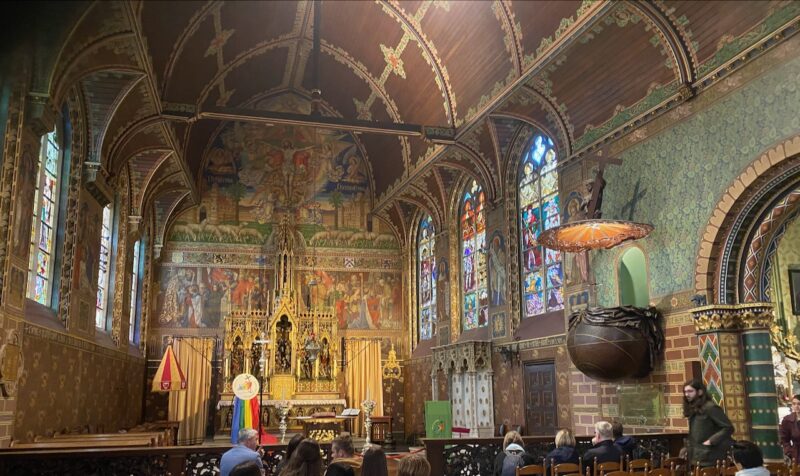
Inside the Basilica of the Holy Blood. Originally built in 15th Century, renovated in Neo-Gothic style in late 19th Century. Bruges, Belgium. Image © PlanetSKI
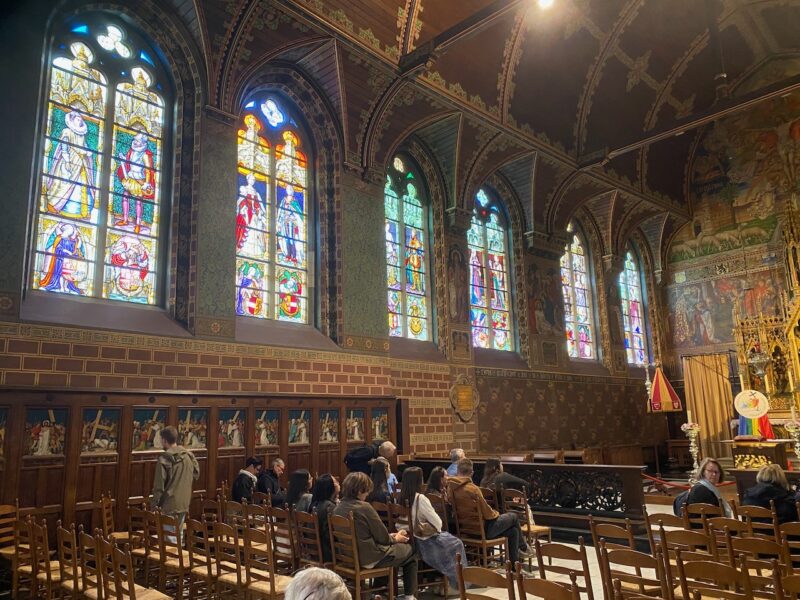
Inside the Basilica of the Holy Blood. Originally built in 15th Century, renovated in Neo-Gothic style in late 19th Century. Bruges, Belgium. Image © PlanetSKI
In World War 1 German forces occupied Bruges and fortunately it suffered little damage before being liberated in October 1918.
It had a similar fate in World War Two and was occupied by the Germans from 1940, and again spared destruction.
On 12 September 1944, it was liberated by Canadian troops.
After 1965, the original medieval city experienced a ‘renaissance’.
Restorations of residential and commercial structures, historic monuments, and churches generated a surge in tourism and economic activity in the city centre.
International tourism boomed and remains so to this day.
Apart from the history and culture what do most people come for?
The Moules-Frites:
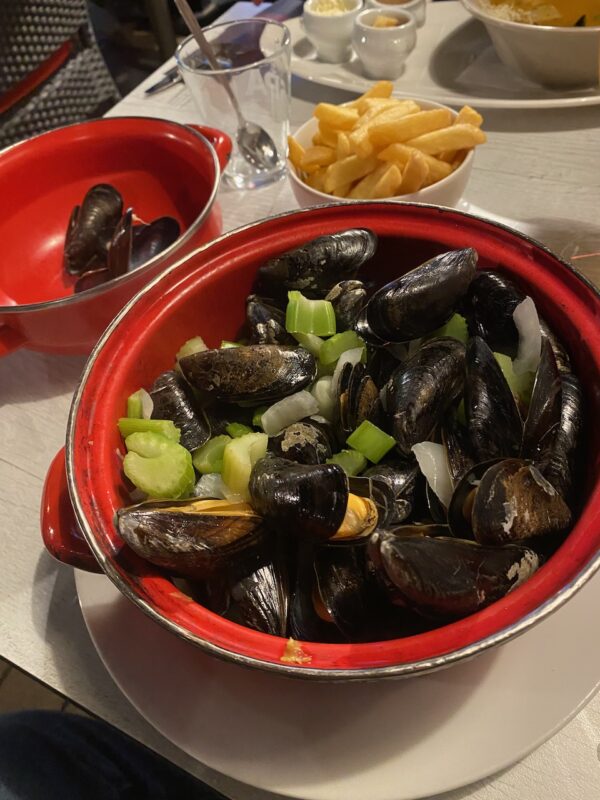
Moules Frites – Bruges, Belgium. Image © PlanetSKI
The Macaron:
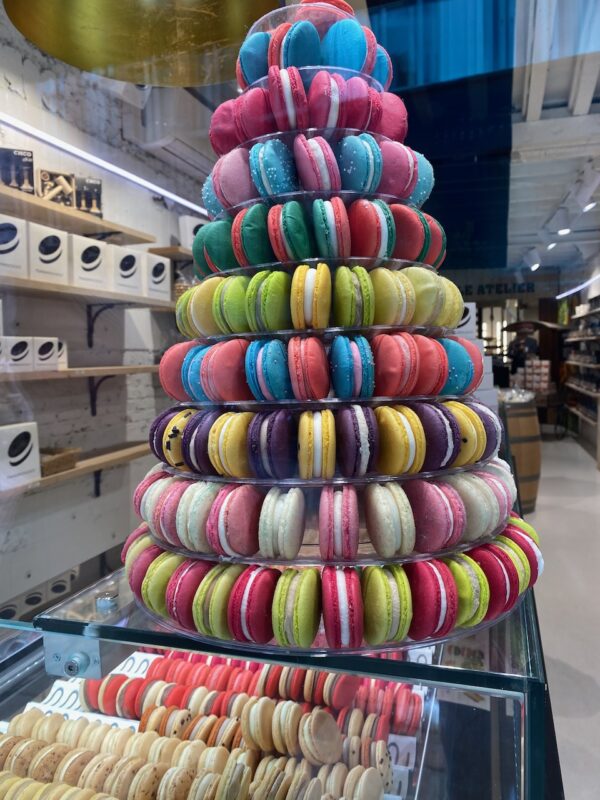
Macaron v Macaroon! In Belgium these are Macaron – Bruges, Belgium. Image © PlanetSKI
The Beer:
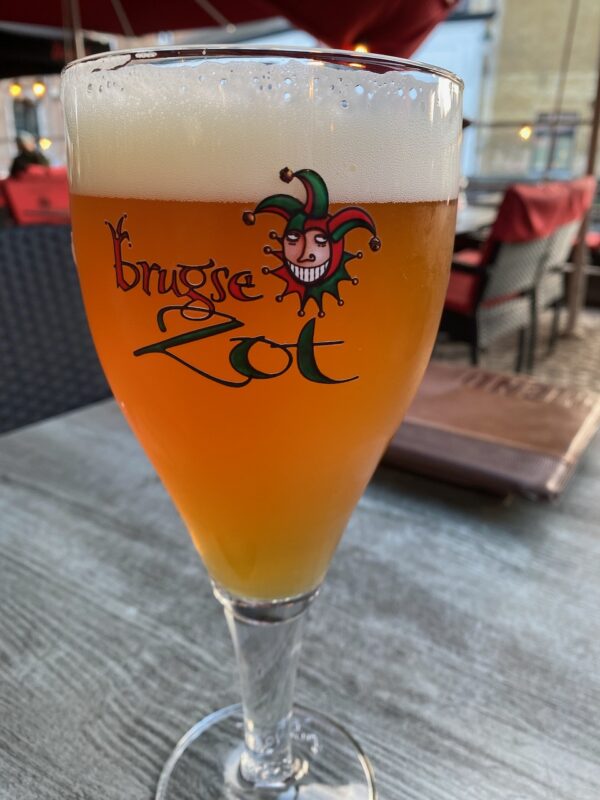
One of the hundreds of different varieties of Belgian Beers – Bruges, Belgium. Image © PlanetSKI
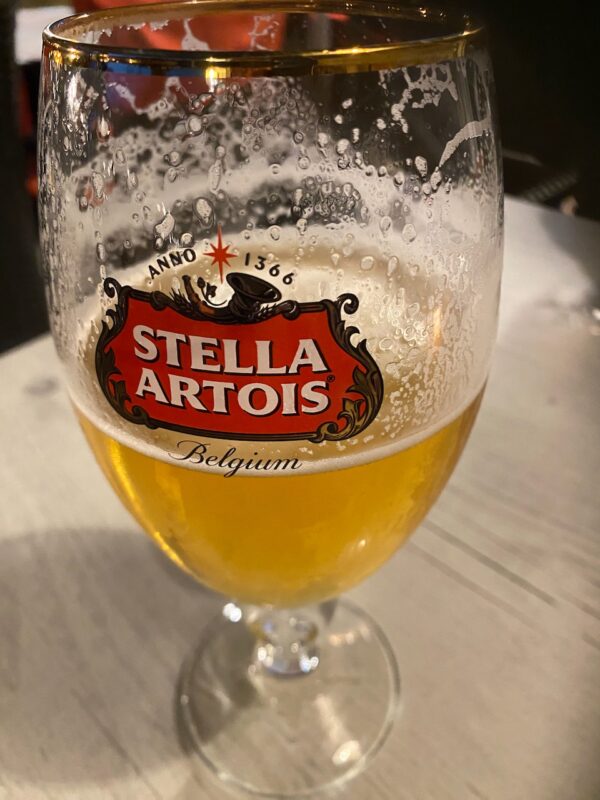
One of the hundreds of different varieties of Belgian Beers – Bruges, Belgium. Image © PlanetSKI
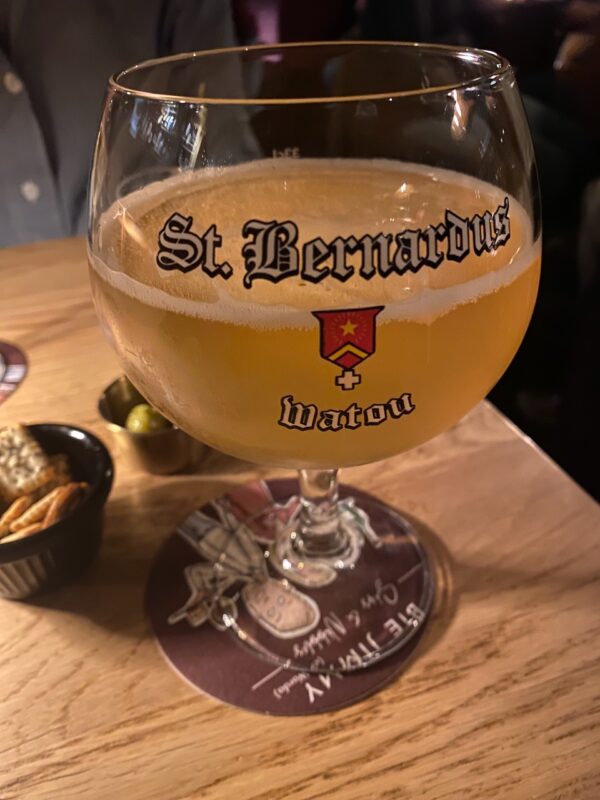
One of the hundreds of different varieties of Belgian Beers – Bruges, Belgium. Image © PlanetSKI
And let’s not forget the chocolate, and the waffles.

La Belgique Gourmande in Bruges, Belgium. Image © PlanetSKI
Plus the odd windmill or four.
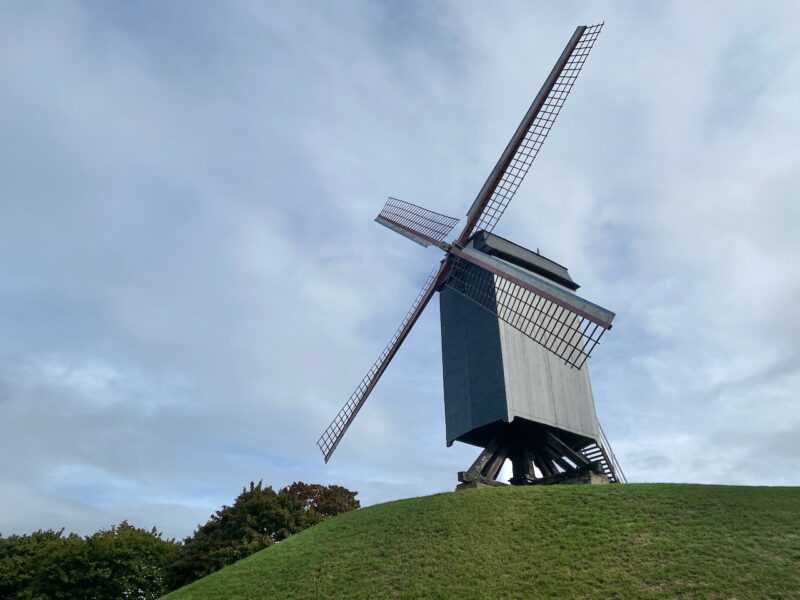
The Bonne Chère windmill. Bruges had as many as 25 windmills around its city walls in the Middle Ages. Today only four remain located close to each other along the Kruisvest, on the outer ramparts of the city. Bruges, Belgium. Image © PlanetSKI
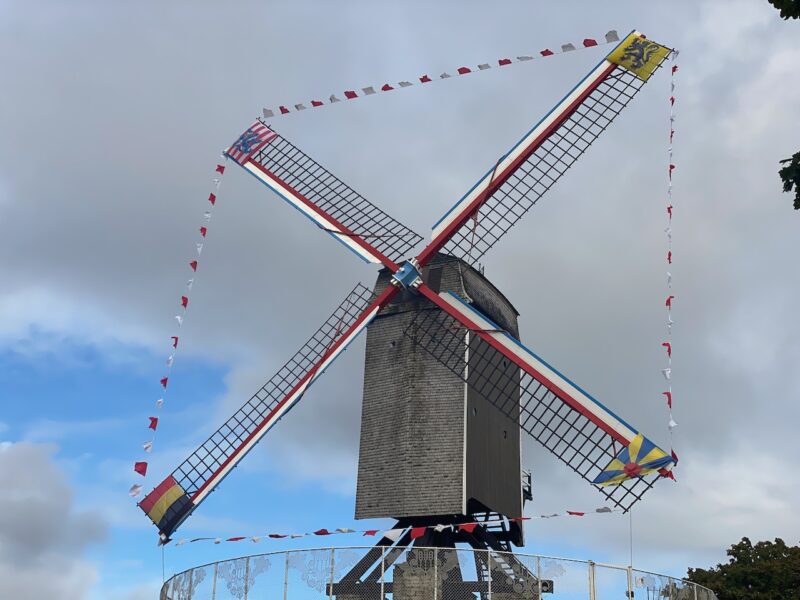
The Sint-Janshuismolen windmill, a historic windmill located along the Kruisvest, the outer ramparts of the city. It is still operational milling grain. Bruges, Belgium. Image © PlanetSKI
Tomorrow the sightseeing proper begins as we take to the canals, climb the 366 steps of the city’s main bell tower and visit the impressive Town Hall.

Boat trips on canals in Bruges, Belgium. Image © PlanetSKI

Belfort (Belfry) from 13th Century, stands 83meters high with 366 steps to the spectacular view from the top of the tower. Markt Square Bruges, Belgium. Image © PlanetSKI

Gothic Hall at the Stadhuis (City Hall) – Bruges, Belgium. Image © PlanetSKI
Day Three:
The first part of this Belgian blog had a small amount to do with skiing.
The posts following have absolutely nothing to do with skiing.
All the better for it, as Bruges is one of the most fascinating and picturesque cities in northern Europe, and skiers and snowboarders do have wider interests after all.
Today is set to be a full day of tourist sightseeing, so best get started with a Belgian breakfast- caffeine and cake.

Coffee stop in Bruges, Belgium. Image © PlanetSKI
More about the food in Bruges later, but suffice to say it is generally superb.
We’re going to visit the museums, the churches, the towers and take to the water on a canal cruise.
The city is steeped in history, as we discovered by chance only a few hundred yards from breakfast.
It may be a hotel now, but this building was the Royal Palace of England, Scotland and Ireland from 1656 until 1659.

King Charles II lived here with with his brothers James Duke of York and Henry Duke of Gloucester until the restoration of the monarchy. Bruges, Belgium. Image © PlanetSKI
King Charles II held Court here until the restoration of the monarchy.
He loved Flanders and Bruges in particular.
“The Flemings are the most honest and true-hearted race of people I have met with,” he said in 1662.
Next stop – the City Hall.
The Stadhuis (City Hall) – Bruges, Belgium. Image © PlanetSKI
Construction started in 1376, and it was finished in 1421.
It is one of the oldest in the Low Countries and it is from this building that the city has been governed for more than 600 years.
It sits to this day.
Inside it is an absolute treat.
On the ground floor there are larger than life paintings.

The Stadhuis (City Hall) in Bruges, Belgium. Image © PlanetSKI

The Stadhuis (City Hall) in Bruges, Belgium. Image © PlanetSKI

Archduke Leopold Wilhelm of Austria – Governor of Bruges from 1647 to 1656. He was the son of Empress Maria Theresa of Austria and brother to Marie Antoinette. His portrait hangs at the Stadhuis (City Hall) in Bruges, Belgium. Image © PlanetSKI

Portrait of Empress Maria-Theresa of Austria, mother of the Governor of Bruges – Archduke Leopold Wilhelm of Austria featured above. Her portrait hangs at the Stadhuis (City Hall) in Bruges, Belgium. Image © PlanetSKI
Then, on the first floor, the 14th century City Hall itself.

Gothic Hall at the Stadhuis (City Hall) – Bruges, Belgium. Image © PlanetSKI

Gothic Hall at the Stadhuis (City Hall) highlighting an impressive vaulted ceiling – Bruges, Belgium. Image © PlanetSKI

Gothic Hall at the Stadhuis (City Hall) – Bruges, Belgium. Image © PlanetSKI
Murals painted in the early 20th century adorn its walls and depict the history of Bruges.

Triumphant return of the Flemings from the Battle of the Golden Spurs in 1302. Both armies were eaually sized – estimated 8,000 men each. The French had the advantage of 2,500 Knights on horseback with 5,500 foot soldiers. In contrast, the entire Flemish army was on foot and due to clever tactics and formation they slaughtered the French. This Mural is in the Gothic Hall at the Stadhuis (City Hall) Bruges, Belgium. Image © PlanetSKI

Bishop consecrating the Zwin waterway in 1404 that linked Bruges to the North Sea. Gothic Hall at the Stadhuis (City Hall), Bruges, Belgium. Image © PlanetSKI
And don’t forget to appreciate the stained glass windows.

One of six stained glass windows dating from 1897 in the Gothic Hall at the Stadhuis (City Hall). Bruges, Belgium. Image © PlanetSKI
In the adjacent historic hall, there is a permanent exhibition depicting the important role played by the sea in Bruges’ prosperity.
There is an an interactive exhibition on the lost Zwin ports and it’s a truly fascinating listen.
Highly recommended by PlanetSKI.

The timeline demonstrates the city’s vital connection to the sea from Roman times, through the Middle Ages and up to the present day. The interactive exhibition explores how Bruges developed into a major trading hub followed by its decline due to the silting up of the Zwin channel. Bruges, Belgium. Image © PlanetSKI
There are some original art and archaeological objects, including a medieval map of Bruges showing the canals that surround it, and its link to the sea.

Medieval map of Bruges, Belgium. Image © PlanetSKI
The detail of the city centre back then is strikingly similar to today.

Medieval map of Bruges – the detail of the city centre is strikingly similar to today. Bruges Belgium. Image © PlanetSKI
Top right is the 83-metre high Belfort (belfry).
It is one of the three iconic towers of Bruges, together with the towers of Onze-Lieve-Vrouwekerk (Church of Our Lady), and Sint-Salvatorskathedraal (St Saviour’s Cathedral).
Belfort (Belfry) from 13th Century, stands 83meters high with 366 steps to the view at the top of the tower. Markt Square Bruges, Belgium. Image © PlanetSKI
The Belfort is one of the oldest examples of medieval urban and public architecture.
It testifies to the late medieval self-consciousness of cities and burghers.
Since 1999, the Belfort, together with 55 other surviving belfries in Belgium and France, has been recognised as a UNESCO world heritage listed building.
We are hiking in St Gervais in the French Alps later this week so a climb up the 366 stairs seemed a decent warm up.
View this post on Instagram
At the top are impressive views of Bruges and the surrounding area.

An impressive view from the top of Belfort (Belfry) tower. Bruges, Belgium. Image © PlanetSKI

An impressive view from the top of Belfort (Belfry) tower. Bruges, Belgium. Image © PlanetSKI

An impressive view from the top of Belfort (Belfry) tower. Bruges, Belgium. Image © PlanetSKI
On the way up you call in at the treasury where the city stamps, seals, and funds were kept in the Middle Ages.
One floor up you reach the impressive music turned out by the carillon and from the tower you see the keyboard now used for the carillon bells.
The carillon in the tower has 47 bells.
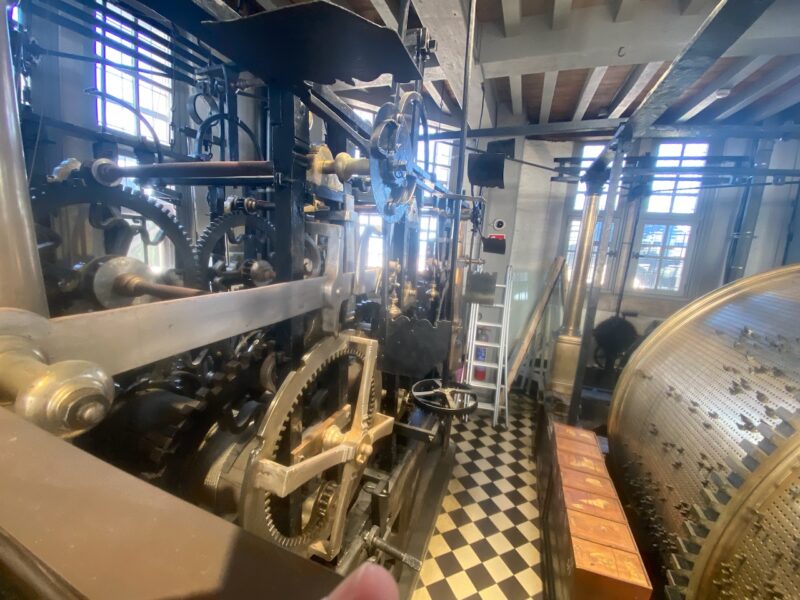
The carillon in the tower has 47 bells. The city’s carillonneur plays free carillon concerts three times a week. The manual playing involves hands striking wooden batons and feet playing pedals. At other times the automatic system uses a large music drum with pins that trigger hammers to strike the different sized bells. Bruges, Belgium. Image © PlanetSKI
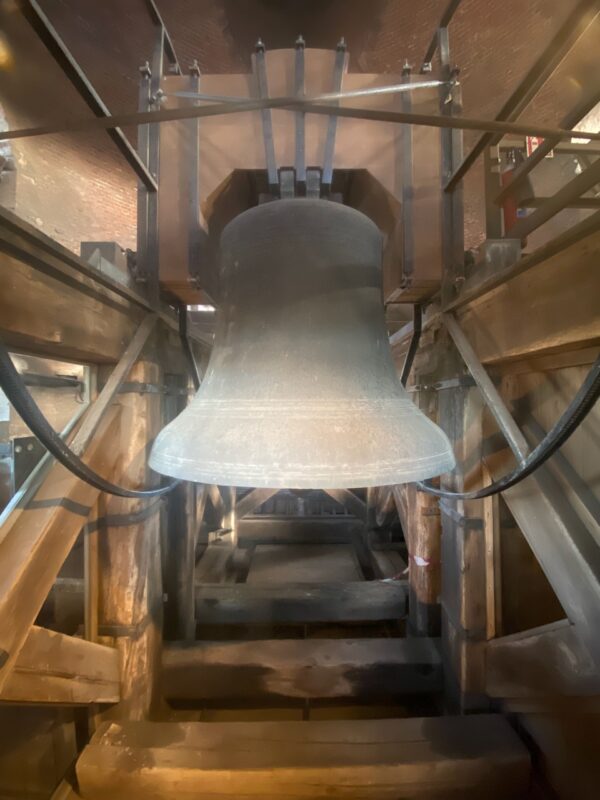
One of the 47 bells in the carillon in the tower. Bruges, Belgium. Image © PlanetSKI
After the tower is was time to return to sea level, on the canals that intersect the city centre.
€15 for a 35-minute trip.
The canals were first built in the early 12th century to connect Bruges to the North Sea. They were vital for its economic development during the Middle Ages. Today they’re a tourst attraction. Bruges, Belgium. Image © PlanetSKI

Bruges, Belgium. Image © PlanetSKI

Bruges, Belgium. Image © PlanetSKI
There are 43 bridges and the oldest one, in the background below, is 750 years old.

Bruges Bridges – The city’s inner circle features 43 bridges. The large number of bridges along with its canals lends Bruges its nickname the “Venice of the North”. Bruges, Belgium. Image © PlanetSKI
Time just slips away on the water and, like a visit to The City Hall and Belfort, is a ‘must-do’ tourist activity when in Bruges.

Bruges Canals, Bruges, Belgium. Image © PlanetSKI

Bruges Canals, Bruges, Belgium. Image © PlanetSKI

Bruges Canals, Bruges, Belgium. Image © PlanetSKI
Now we mentioned the food in Bruges earlier.
It is out of this world, and mostly at a reasonable price.

Creamy Burrata with tomatos garnished with carrots – Bruges, Belgium. Image © PlanetSKI
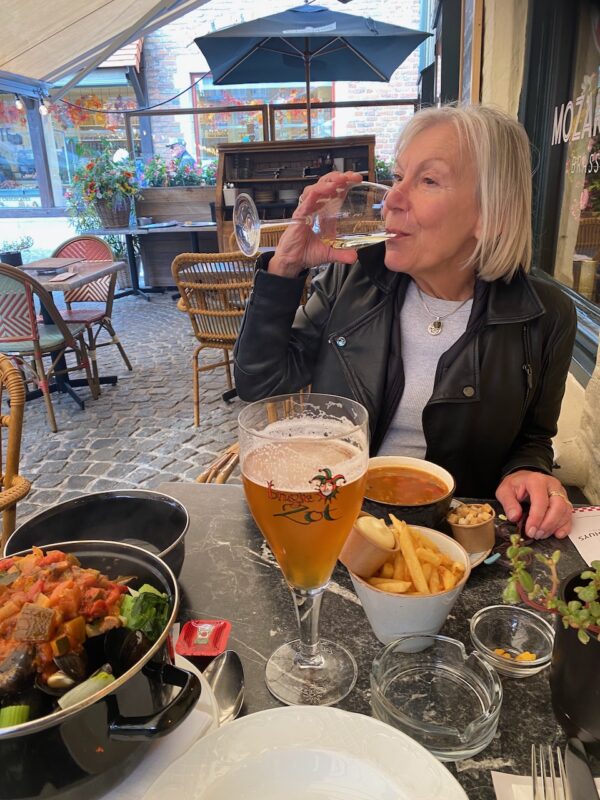
Bruges is better known for its beers. But we tried a delicious dry white wine from the Damme region near Bruges, Belgium. Image © PlanetSKI
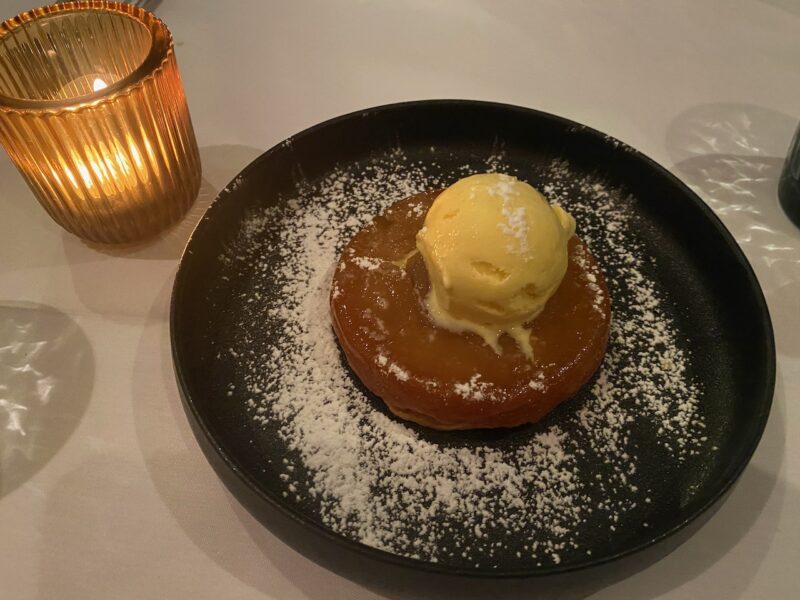
Chocolate pudding Bruges, Belgium. Image © PlanetSKI
Thank you Bruges, it has been a fabulous and fascinating time.

PlanetSKI in Bruges, Belgium. Image © PlanetSKI
Next stop, St Gervais in the French Alps for that autumn hiking we mentioned.
Updated:

St Gervais, France. Image © PlanetSKI

PlanetSKI: Number 1 for digital ski news
Your digital platform for ski news, resort information, travel, equipment rental, sport, money saving deals and everything connected with snowsports – web site, social media & more.