



Third European Heatwave Impacts Summer Ski Areas, Accelerates Glacier Melt & Sparks Wildfires
17th July 2026
Last modified on July 25th, 2026
Tignes closed its glacier skiing early with other areas hit. It is the longest heatwave so far this summer but is now easing. UPDATED
The heatwave lasted over two weeks with the freezing level at well over 4,000m in the Alps.
It is now easing off and temperatures are set to fall in the coming days.
Tignes was due to close last Sunday, July 19th, but it shut the slopes three days earlier on Thursday.
“The Grande Motte glacier will be closed to skiers starting Thursday, July 16th,” said the resort in a statement on Wednesday.
“Due to the current state of the glacier, safety conditions are no longer optimal for skiing.”
It is feared summer skiing in Tignes may end completely within a decade.
According to Clément Colin, CEO of Altta, the new company managing the ski lifts in Tignes, “in ten years, the glacier will have almost completely melted.”
The glacier area shared by Zermatt in Switzerland and Cervinia Italy remains open.
As does glacier skiing in Passo Stelvio in Italy.
Hintertux in Austria has now closed for a summer break.
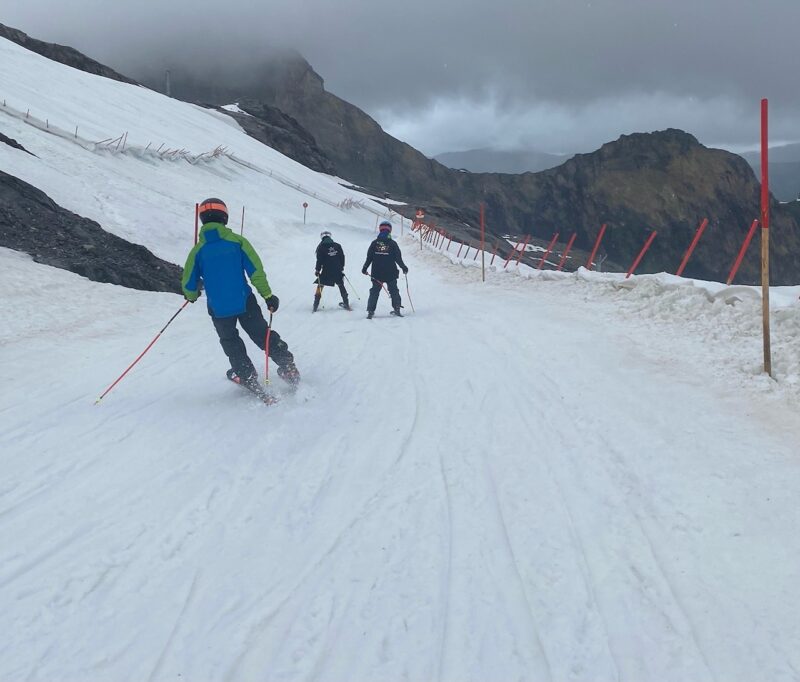
Library image – Hintertux, Austria, in the summer. Image © PlanetSKI
Skiing is expected to restart in September 2026 and the ‘Hintertux Park Opening’ is scheduled for early October.
Saas‑Fee in Switzerland opened for the 2026–27 season last Saturday on July 18th, despite the heatwave.
Lifts are open from 7am to midday.
It plans to remain open until October 31st if conditions allow.
Elsewhere in Europe, Galdhøpiggen summer ski area in Norway still has some skiing on offer.
Many parts of the Alps and the Pyrenees are dry with wildfires breaking out or threatened.
In the France a 22-year-old firefighter died while tackling a wildfire in the Savoie region in the Alps.
In Scotland Cairngorm Mountain has temporarily closed its summer operations due to a nearby wildfire

Glenmore fire. Image c/o Scottish Fire & Rescue Service.
Across Europe 155,569 hectares have burnt so far this summer.
That’s below the 228,098 hectares at the same time last year that was Europe’s worst ever for wildfires; but scientists fear the early start to the fires may see 2026 exceed the 2025 total.
The latest heat wave is also accelerating glacier melt with Europe being the fastest warming continent for the past 30 years.
- European heatwave hit the glaciers in the Alps
- European heatwave hits glaciers hard
- ‘Glacier Loss Day’ in the Alps reached
The heatwave has affected climbing routes on the Matterhorn and Mont Blanc.
Mountain guides in Zermatt are advising climbers to postpone attempts on the summit of the Matterhorn because of an increased risk of rockfall.
High temperatures and poor winter snowfall have left parts of the mountain unstable.
In Italy guides in Courmayeur have stopped taking clients up Mont Blanc/Monte Bianco on the classic route via the Miage glacier.
“With the heat we had in June, conditions deteriorated quickly. It’s no longer safe enough to take clients up there,” said the President of the Courmayeur Guides Society, Alex Campedelli.
“The glacier is full of crevasses and it’s hard to find the right route.
“We decided last week we won’t sell that ascent to clients anymore.”
It is reported that some guides in Chamonix have stopped taking people up Mont Blanc after two people died on the mountain last Wednesday.
“On the Mont Blanc and Matterhorn routes, we simply need to have the humility to stop them for a while,” said Pierre Mathey of the Swiss Association of Mountain Guides (ASGM) to the AFP newsagency.
“This heatwave is dragging on and we’re seeing significant warming of the ground, snow and ice are melting, and the permafrost is thawing.”
This causes rockfalls and other hazards.
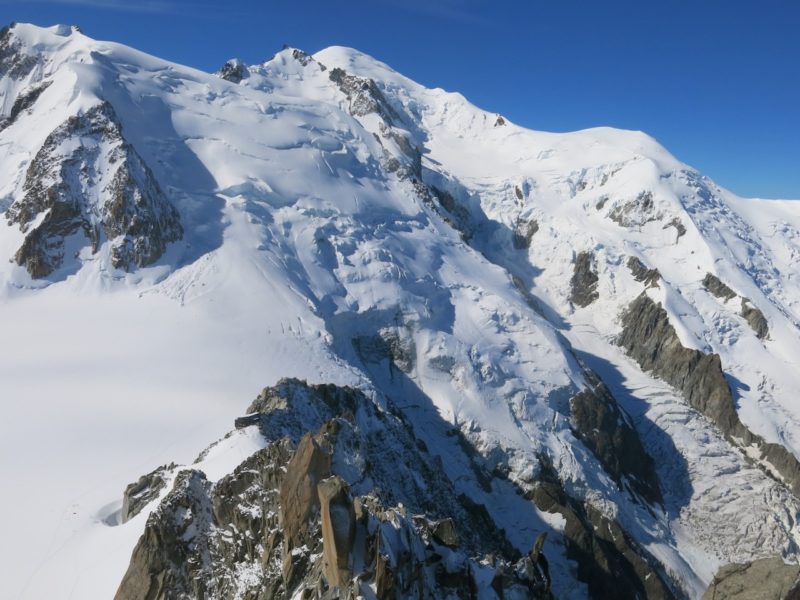
Mont Blanc, France. Image © PlanetSKI
Researchers monitoring the Rhone Glacier in the Swiss Alps warn that extreme temperatures have accelerated ice loss.
Some areas have lost nearly 1.5m of ice in the past few weeks.
According to scientists the glaciers have lost large amounts of stored water during the recent heatwave raising concerns over the growing impact of climate change.
The early disappearance of snow cover is leaving ancient ice exposed to further melting.
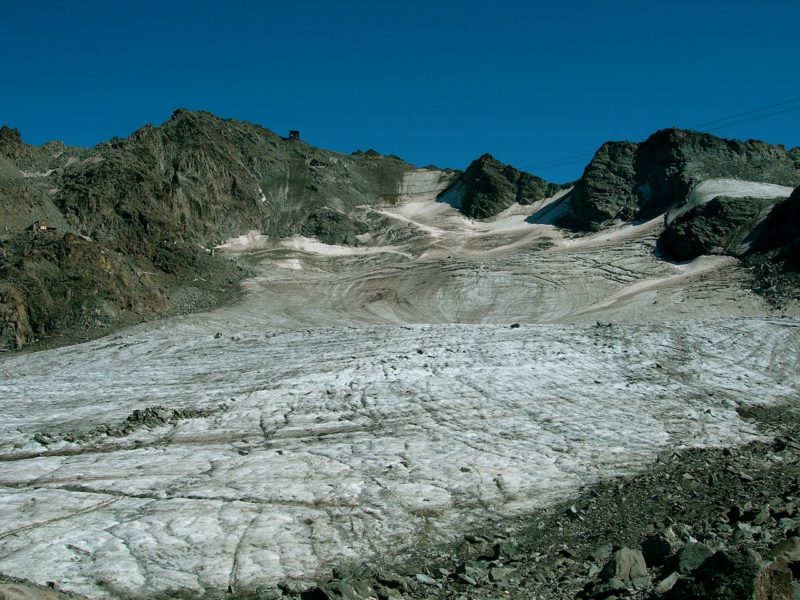
Mont Fort glacier, Verbier. Image © PlanetSKI
PlanetSKI: Number 1 for digital ski news
Your digital platform for ski news, resort information, travel, equipment rental, sport, money saving deals and everything connected with snowsports – web site, social media & more.