



Cooler Temperatures Return to the Alps, But All Glacier Ski Areas Remain Shut
21st August 2026
Last modified on August 22nd, 2026
For the first time in decades there are no summer ski areas open in Europe as the heatwaves melt the glaciers with little fresh snow falling. Summer ski areas say they will reopen when conditions allow. UPDATED
The weather has become colder with heavy thunderstorms in parts of the Alps and some snowfall at altitude.
It is not enough to allow areas to re-open and there is no immediate sign of that happening.
The alpine glaciers are seeing temperatures below freezing at night with a small amount of snow, so at least things are stabilising.
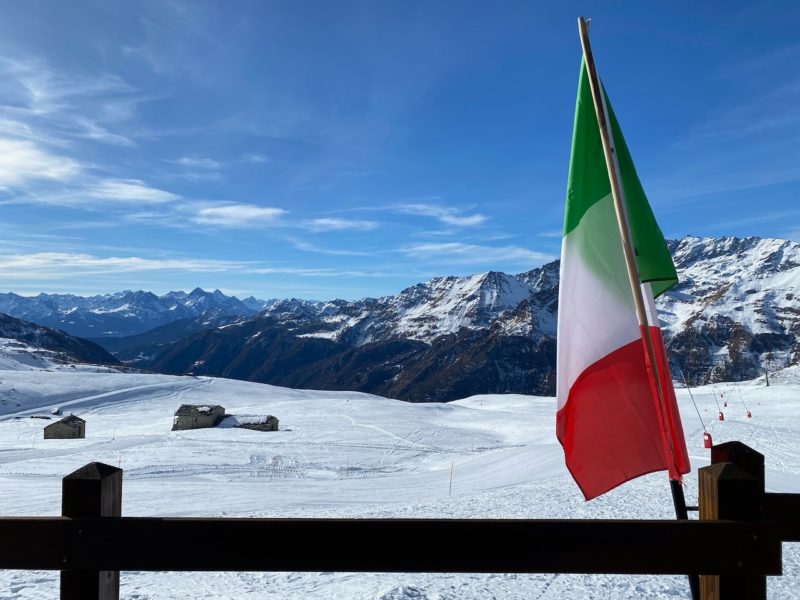
Passo Stelvio in Italy was the last resort to close as it brought summer operations to an end on Saturday 15th August.
It says it will re-open when conditions allow, as does the summer glacier ski areas of Zermatt/Cervinia and Saas-Fee.
The Galdhøpiggen summer ski area in Norway is also shut and says it will re-open if conditions allow.
According to Snow-Forecast it is the first time for 60 years that no lift served ski areas in Europe are open in the summer.
During previous problem periods, the summer of 2022 and the pandemic in 2020, at least one ski area managed to keep operating.
View this post on Instagram
Over the next two weeks the weather in the Alps will remain ‘changeable’.
It will warm up again next week, with temperatures in the lower valleys into the high 20°Cs mid-week, according to weathertoski.co.uk.
Later next week the weather will turn more unsettled, and a little cooler again.
It has been a damaging few months for the glaciers and mountains in the Alps as we have reported:
This is the reality of a collapsing glacier as the hot weather takes its toll:
View this post on Instagram
It was filmed from the Gandegg Hutte in Zermatt.
The weather this summer has led to many national ski teams heading to the southern hemisphere to train for next season.
The Austrian teams are currently in Chile and Argentina in South America.
A total of ten World Cup and European Cup teams will complete their on-snow training in the Andes until the end of September.
The training groups are spread across several locations in Chile and Argentina – including La Parva, El Colorado, Valle Nevado, Portillo and Ushuaia.
Other teams and athletes are in New Zealand.
Zermatt has been able to keep some of its glacier training open for the Swiss national team.
The racers are being taken to the top by snowmobiles rather than using the T-bars.
Swiss racers though are now heading to the southern hemisphere.
“We don’t have the summers of a few years ago,” said Matteo Joris, coach of the Swiss team, earlier in August.
“We must adapt. If the glaciers close in July and August, we’ll go straight to the southern hemisphere.”
The Swiss team is now heading to South America and New Zealand for a month to experience real winter conditions.
The windows of opportunity for summer training on glaciers in Europe are getting shorter, and maintaining the slopes and facilities on the ice is becoming more difficult.
Martin Hug, CEO of Zermatt Bergbahnen, said the safety of guests and employees is the top priority.
“If these conditions are no longer met, operations will be adjusted responsibly to accommodate natural conditions,” he said.
The recent heavy rain in the Alps has helped boost water levels.
In Switzerland the Federal Office for the Environment, FOEN, recorded historic lows at eleven monitoring stations.
According to FOEN, water levels in July in many watercourses north of the Alps are so low that this only occurs once every two to ten years.
In some cases only once every 30 to 100 years.
South of the Alps, the situation is less dramatic, partly thanks to glacial melt.
FOEN has said Switzerland still has “abundant water resources”.
The production of hydro-electricity has been affected, but Switzerland has expanded its production of solar energy in recent years.
One upside is that the hot weather this summer has seen more people heading to the mountains in the summer months to escape the heat.
They are also enjoying the growing number of summer activities on offer as ski resorts look to diversify.

Crans-Montana in the summer. Image c/o Patrick Guller.

Crans-Montana in the summer. Image c/o Patrick Guller.
29% more people are using the Swiss ski lifts in the summer in 2026 than five years ago.
We reported on it earlier:

Crans-Montana in the summer. Image c/o Patrick Guller.
PlanetSKI: Number 1 for digital ski news
Your digital platform for ski news, resort information, travel, equipment rental, sport, money saving deals and everything connected with snowsports – web site, social media & more.