




PlanetSKI Heads to Dinosaur Country
16th September 2026
Sometimes we post about our travels that have absolutely nothing to do with skiing. This is one of those occasions. We’re discovering dinosaurs in Alberta, Canada. NEW
We have spent the last few days in the wonderfully off-the-beaten-track ‘town’ of Nordegg in Alberta in Canada.
It calls itself a town, but there’s not much of it:
- 1 restaurant/bar
- 1 coffee shop
- 1 General Store
- 2 petrol pumps.
Here’s Main St:
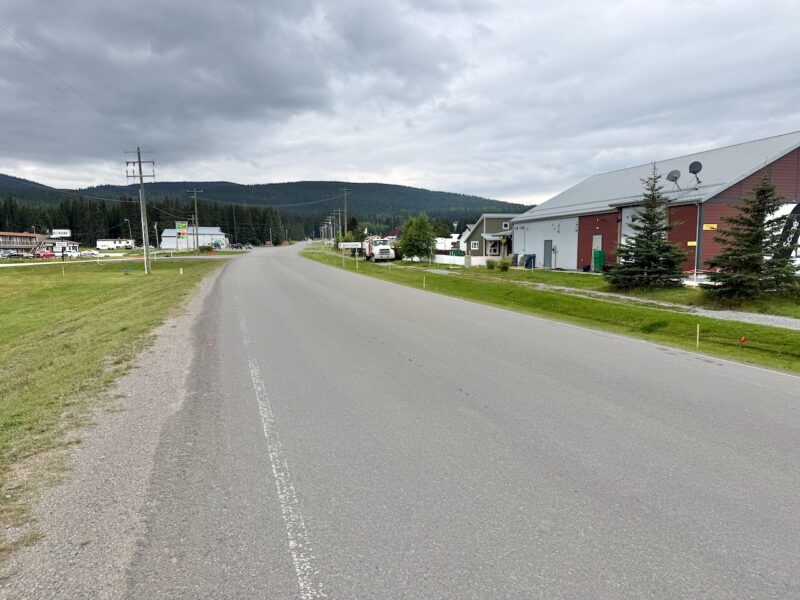
PlanetSKI’s Autumn Alberta road trip. Image © PlanetSKI
See here for PlanetSKI’s full post from Nordegg:
Earlier we posted from Calgary in Alberta:
Now we are heading south in Alberta to dinosaur country – the Dinosaur Provincial Park that has the highest concentration of discovered dinosaur bones of anywhere in the world.
Plus The Royal Tyrrell Museum of Palaeontology that is one the leading research centres into dinosaurs in the world.
There is much more to post about on PlanetSKI than skiing and snowboarding.
We are remaining off the beaten track in Canada – travelling on minor roads, sometimes gravel, rather than the multi-lane highways.
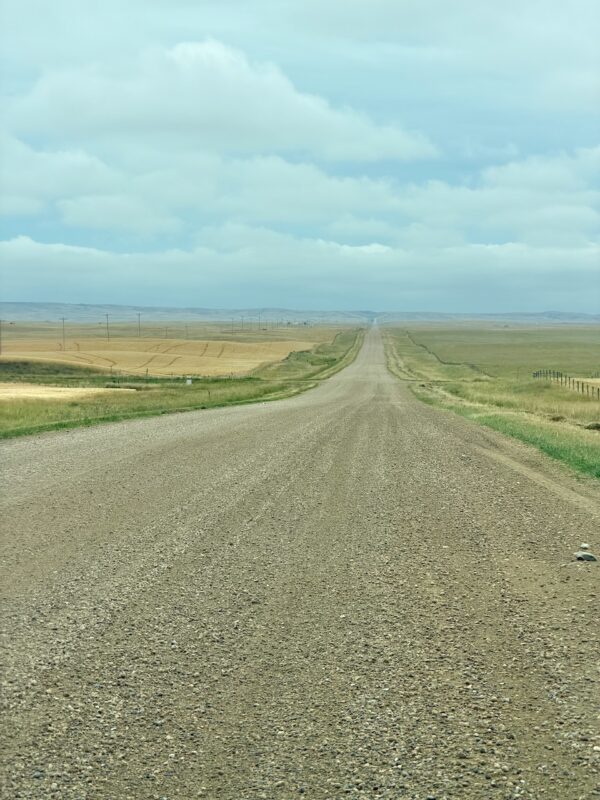
The road to Drumheller, Alberta, Canada. Image © PlanetSKI
That’s where you come across gems like the Bleriot Ferry that crosses the Red Deer river to the north of Drumheller.

The road to Drumheller, Alberta, Canada. Image © PlanetSKI
Sadly on our visit to the Dinosaur Provincial Park it was pouring with rain so we saved a visit for another day and headed to the Royal Tyrrell Museum instead.
Right, lets get the jokes out of the way.
Here’s a couple of old dinosaurs.
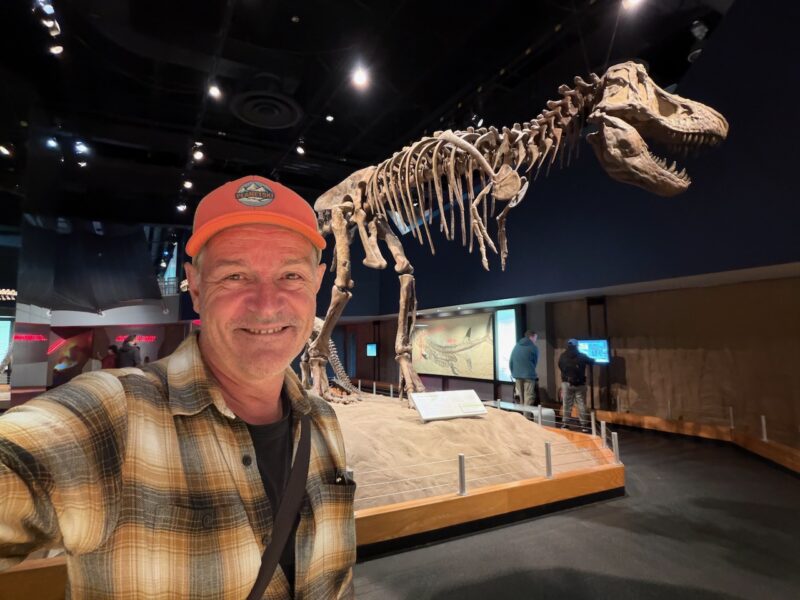
The Royal Tyrrell Museum of Palaeontology, Alberta, Canada. Image © PlanetSKI
And some ancient fossils.
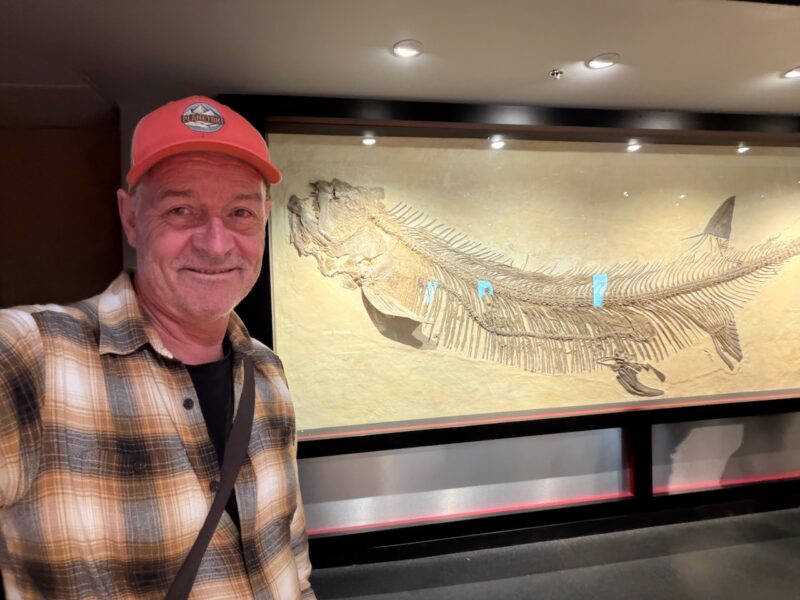
The Royal Tyrrell Museum of Palaeontology, Alberta, Canada. Image © PlanetSKI
The museum is an absolute treat as it incorporates the history of Earth alongside the history of the dinosaurs.
The Earth was formed more than 4.6 billion years ago and for nearly 4 billion years it was not hospitable for life.
Then the surface of the planet cooled, oceans began to fill and the first life appeared.
Eventually these tiny organisms evolved the ability to harness the sun’s energy and began shaping life as we know it.
In pride of place in the museum is Black Beauty, a rare specimen of a Tyrannosaurus Rex.
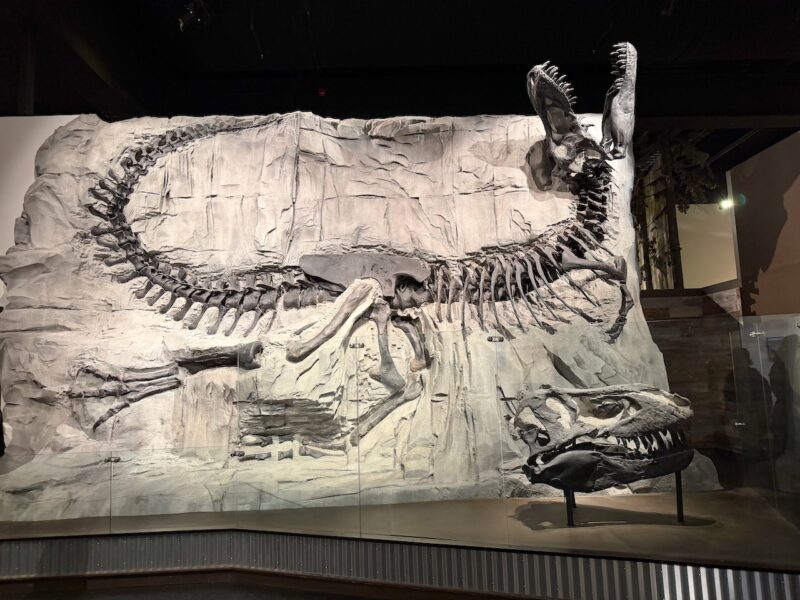
The Royal Tyrrell Museum of Palaeontology, Alberta, Canada. Image © PlanetSKI
Tyrannaosaurus lived in Alberta for about 10 million years at the end of the Mesozoic Era.
‘Black Beauty’ is called so due to the colour of its bones that were darkened by the element manganese during fossilization.
Then there is the main attraction of the museum – the huge Dinosaur Hall.
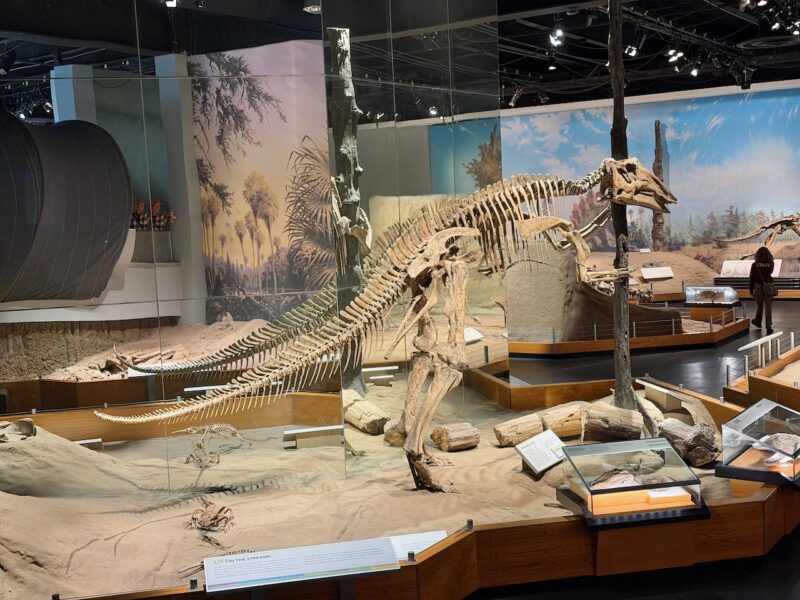
The Royal Tyrrell Museum of Palaeontology, Alberta, Canada. Image © PlanetSKI

The Royal Tyrrell Museum of Palaeontology, Alberta, Canada. Image © PlanetSKI
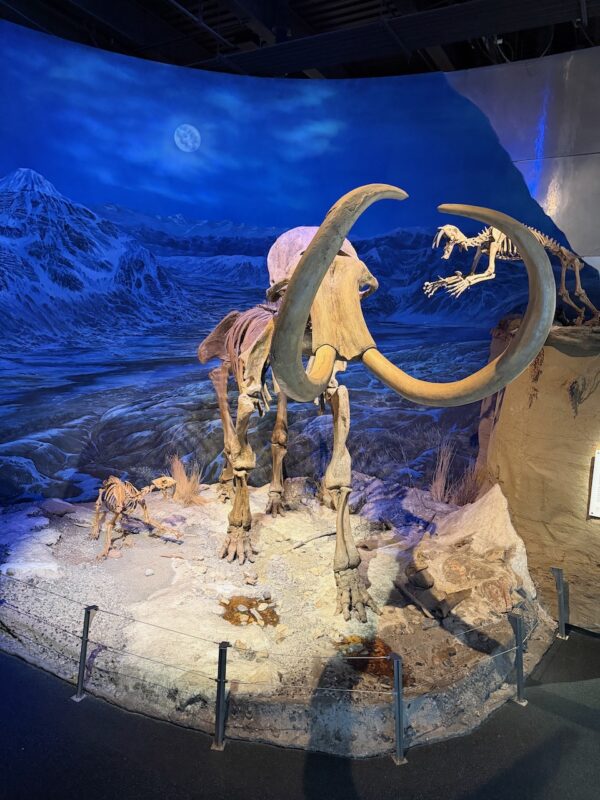
The Royal Tyrrell Museum of Palaeontology, Alberta, Canada. Image © PlanetSKI
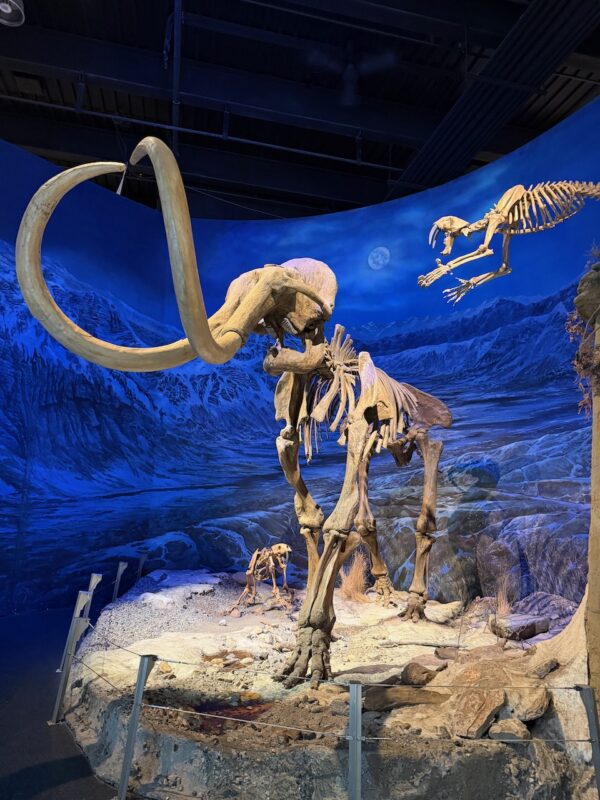
The Royal Tyrrell Museum of Palaeontology, Alberta, Canada. Image © PlanetSKI
The age of the dinosaurs came to an end when an asteriod about 10km wide crashed into the Earth 66 million years ago.
It likely hit the Earth in the Yucatan Peninsular in Mexico.
It caused untold damage and dinosaurs along with many other animals and ecosystems were destroyed.
It is estimated that 76% of all the species at the time became extinct.
Some bones remain.
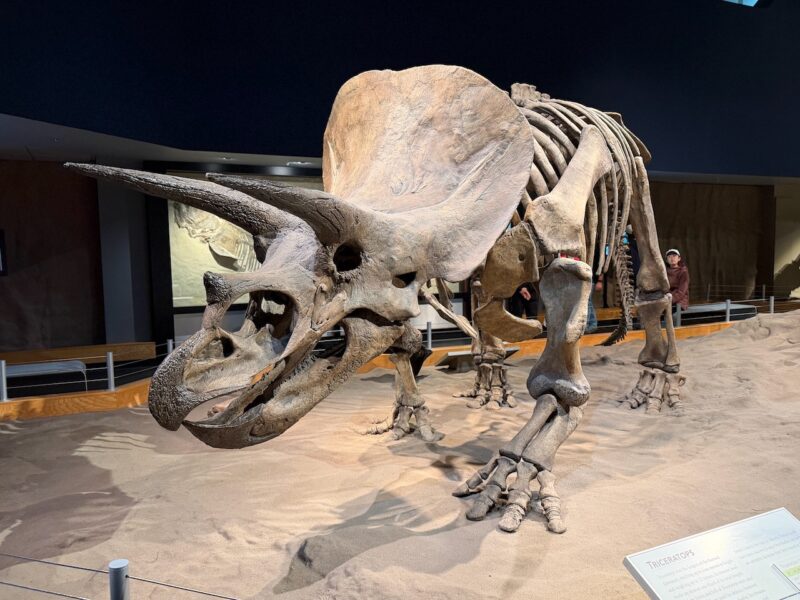
The Royal Tyrrell Museum of Palaeontology, Alberta, Canada. Image © PlanetSKI
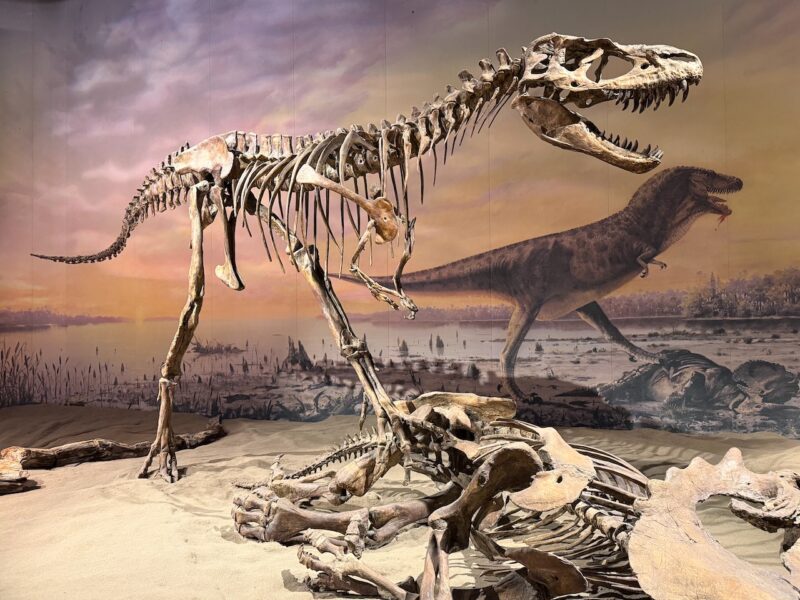
The Royal Tyrrell Museum of Palaeontology, Alberta, Canada. Image © PlanetSKI
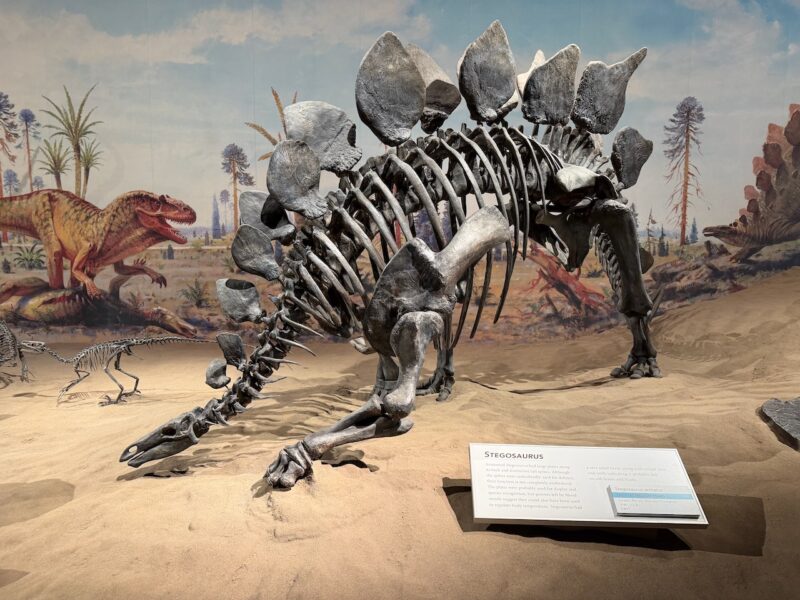
The Royal Tyrrell Museum of Palaeontology, Alberta, Canada. Image © PlanetSKI
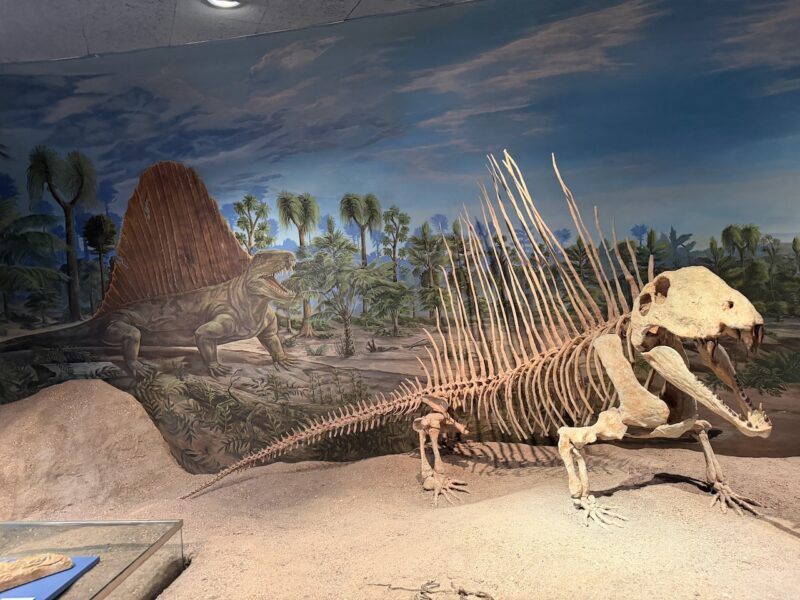
The Royal Tyrrell Museum of Palaeontology, Alberta, Canada. Image © PlanetSKI
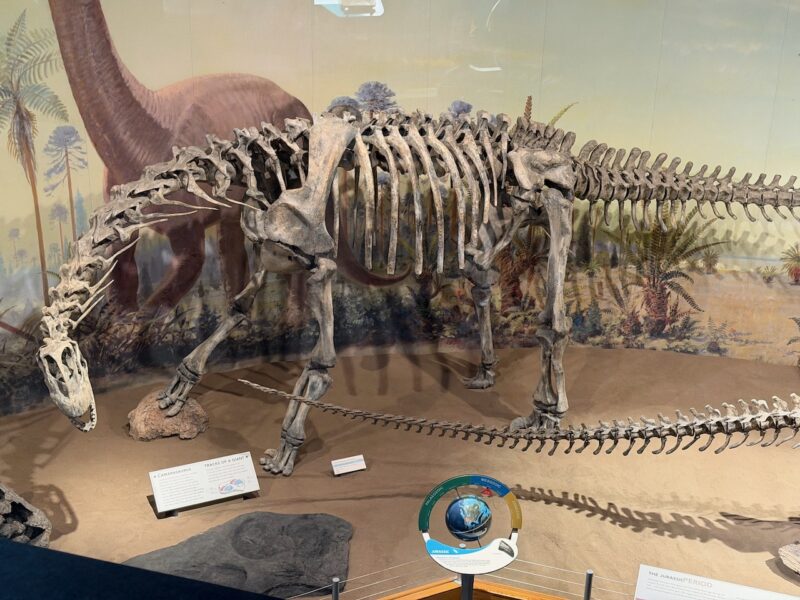
The Royal Tyrrell Museum of Palaeontology, Alberta, Canada. Image © PlanetSKI
The exhibition ends with a warning to humanity.
“The unprecedented rate and magnitude of human-induced climate change pose significant threats to life on Earth”.
Sobering stuff.
When we emerged after several hours in the museum the rain had eased, so we headed to see other famous features of this areas – the Hoodoos.
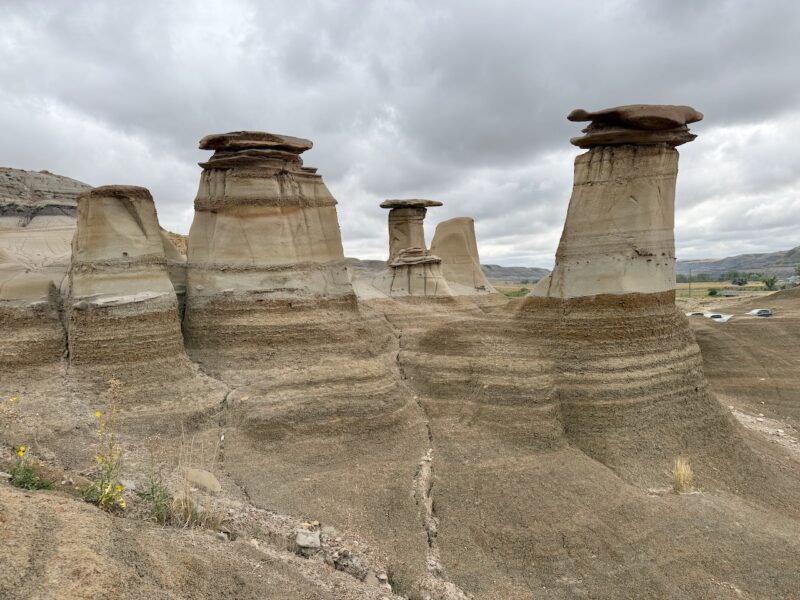
Hoodoos near Drumheller, Alberta, Canada. Image © PlanetSKI
They are eroded pillars of soft sandstone rock topped with a resilient cap.
The cap protects the soft rock underneath from eroding as quickly as the surrounding rock.
If the cap deteriorates then the pillar is more vulnerable to the elements and rapidly deteriorates.
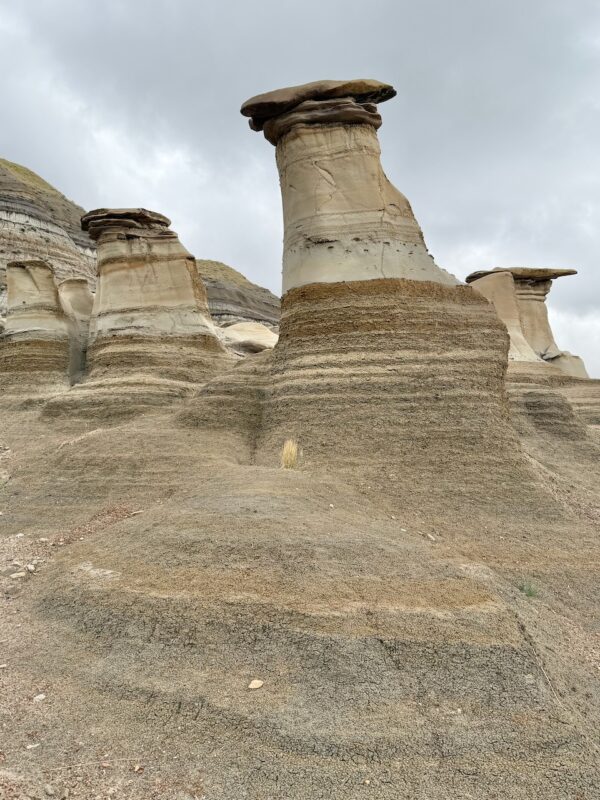
Hoodoos near Drumheller, Alberta, Canada. Image © PlanetSKI
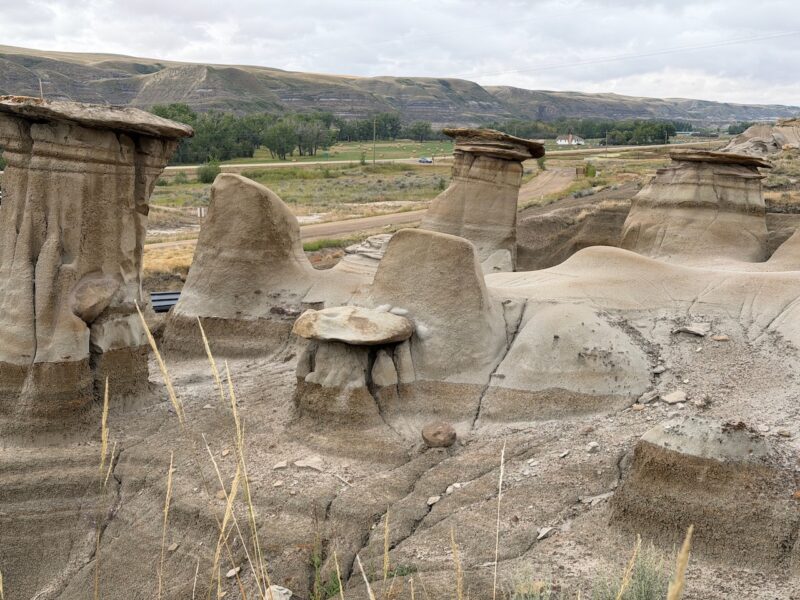
Hoodoos near Drumheller, Alberta, Canada. Image © PlanetSKI
The word Hoodoo originates from the Hausa language of West Africa.
The natural setting they are in is quite stunning.
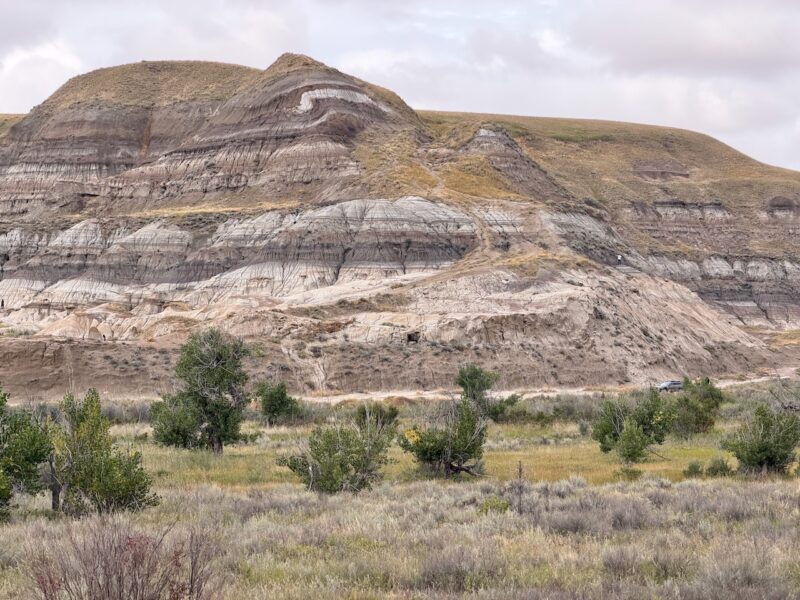
Scenery near Drumheller, Alberta, Canada. Image © PlanetSKI
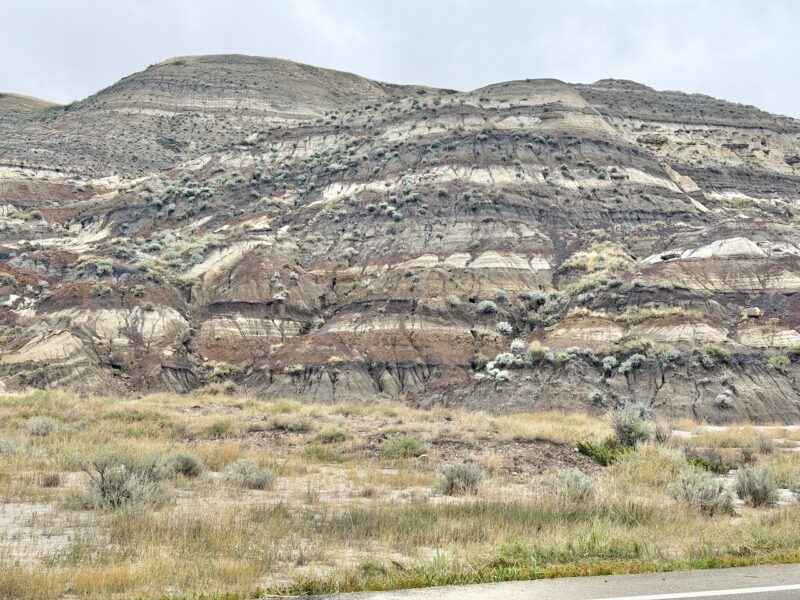
Scenery near Drumheller, Alberta, Canada. Image © PlanetSKI
Plant material in ancient swamps decayed to form the various layers.
The beauty of nature in this part of Alberta is all rather in stark contrast the the town of Drumheller itself that is the self-appointed ‘dinosaur capital of the world’.
It claims the largest ‘dinosaur’ in the world next to a car park.
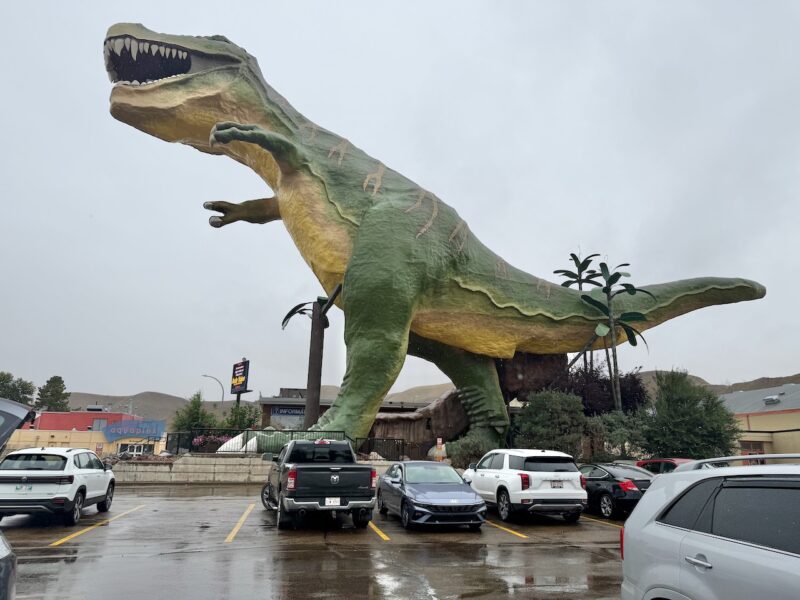
Drumheller, Alberta, Canada. Image © PlanetSKI
There are dozens of plastic dinosaurs all over town in some rather strange places.
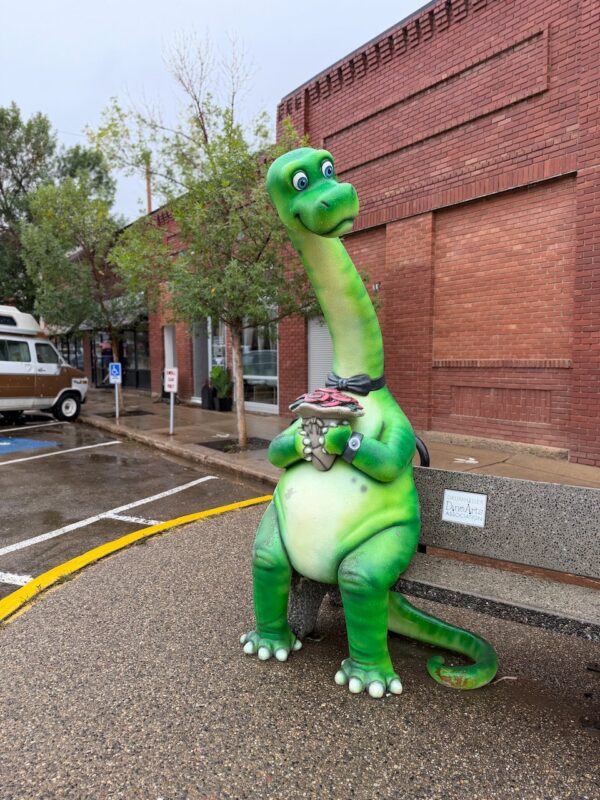
Drumheller, Alberta, Canada. Image © PlanetSKI
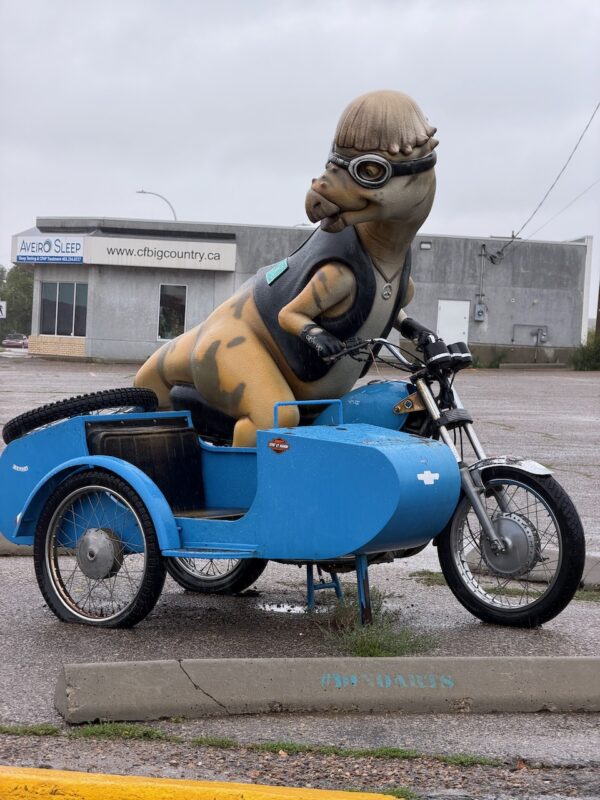
Drumheller, Alberta, Canada. Image © PlanetSKI
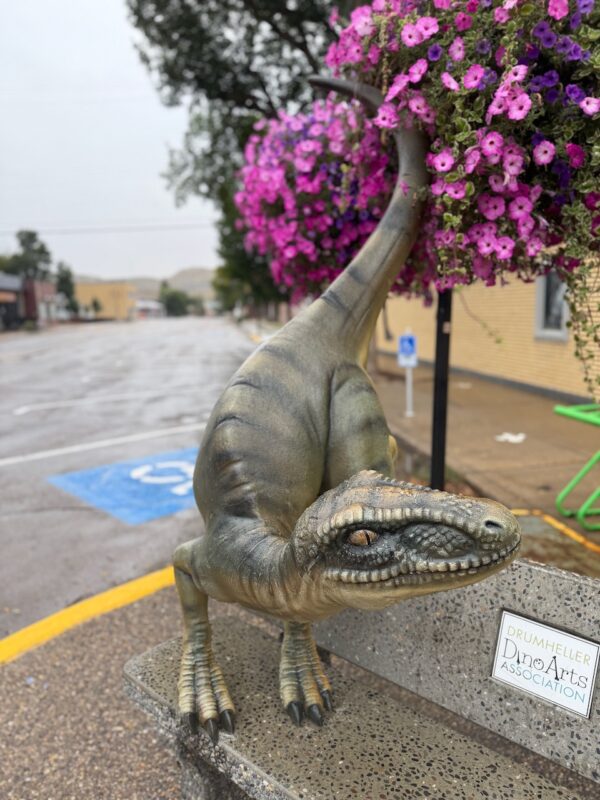
Drumheller, Alberta, Canada. Image © PlanetSKI
Drumheller – What a funny old town.
The next stop on PlanetSKI’s autumn adventures in Canada is rather different.
It’s the gateway city to the ski resort of Whistler.
Vancouver:
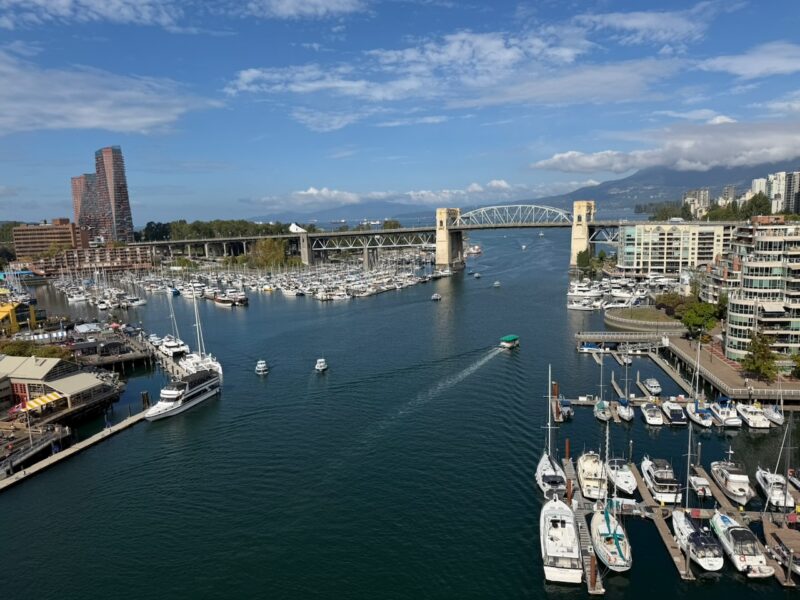
Vancouver, Canada. Image © PlanetSKI
More to follow folks…
PlanetSKI: Number 1 for digital ski news
Your digital platform for ski news, resort information, travel, equipment rental, sport, money saving deals and everything connected with snowsports – web site, social media & more.